

Best Stablecoin spend Crypto Cards 2026
Compare stablecoin spend crypto cards using verified issuer sources.
Search
Quick Filters
Advanced Filters
Issuer
Region
Features
Card Type
Stablecoin crypto cards are payment tools that allow users to spend dollar-pegged or euro-pegged digital assets directly at retail terminals. In 2026, stablecoin spending has become the "Checking Account" of the Web3 world. While Bitcoin is increasingly viewed as a long-term "Gold" reserve, stablecoins like USDC, USDT, and EURC provide the price stability and predictability required for rent, groceries, and daily travel without the stress of market volatility.
2026 Stablecoin Spend Leaders: Comparison Table
The following cards offer the most efficient liquidation and highest yields for stablecoin holders.
| Card | Primary Yield | Conv. Fee | Cashback | Custody |
|---|---|---|---|---|
| Tria Signature | 15% APY | 0.5% | 6% | Self-Custody |
| Bybit Standard | 2–10% BTC | 0.9% | 2–10% | Custodial |
| Bleap Mastercard | N/A | 0% | 2% (10 USDC cap) | Self-Custody |
| Kraken Card | 5% APR (Auto) | 0% | 1% | Custodial |
| Nexo Dual | Up to 8% | 0% | 2% | Hybrid |
| Gnosis Pay | N/A | 0% (EURe) | 1% | Self-Custody |
The Volatility Problem: BTC vs. Stablecoins
The primary barrier to using crypto for daily life has always been the "Pizza Day" risk—the fear of spending an asset that will double in value next month. Stablecoin cards eliminate this psychological friction.
Illustration 1: Purchasing Power Stability (Scenario: $100 Grocery Bill)
| Asset Used | Asset Value at Purchase | Value 30 Days Later | The "Regret" Factor |
|---|---|---|---|
| Bitcoin (BTC) | $100 | $145 | High (You lost $45 in gains) |
| USDC / USDT | $100 | $100 | Zero (Predictable Spend) |
By spending stablecoins, you decouple your Life Expenses from your Investment Strategy, allowing your core portfolio to remain invested while your liquid capital covers your bills.
How Stablecoin Liquidation Works in 2026
Most stablecoin cards utilize a Just-in-Time (JIT) liquidation engine.
- Balance: You hold USDC in a non-custodial wallet (e.g., Bleap, MetaMask, or Tria).
- Authorization: You tap your card at a merchant.
- Real-time Swap: The protocol instantly swaps your USDC for the merchant's local currency (USD, EUR, GBP) using a high-liquidity pool.
- Settlement: The merchant receives fiat, and your on-chain balance is deducted—often with lower fees than volatile asset swaps.
The Multi-Currency Stablecoin Strategy
Advanced users hold multiple stablecoins to optimize for both spending flexibility and yield opportunities in 2026.
| Stablecoin | Peg | Best Use Case | Avg. DeFi Yield (2026) |
|---|---|---|---|
| USDC | $1.00 USD | US-based spending, highest liquidity | 4.5% |
| USDT | $1.00 USD | Asian markets, CEX deposits | 5.2% |
| EURC / EURe | €1.00 EUR | European spending, zero FX fees in EEA | 3.8% |
| DAI | $1.00 USD | Decentralized, censorship-resistant | 5.0% |
The Yield-While-You-Wait Optimization
One of stablecoins' greatest advantages: they can earn yield while sitting in your spending wallet.
How It Works:
- Hold USDC in a yield-bearing smart account (e.g., Tria Signature offers 15% APY on idle balances).
- When you swipe your card, the protocol instantly withdraws USDC from the yield pool.
- You earn interest on unspent balances 24/7—your "Checking Account" becomes an investment vehicle.
Real-World Example:
- Starting Balance: $10,000 USDC.
- Monthly Spend: $2,000 (Average balance: $9,000).
- APY: 15% (as offered by Tria).
- Monthly Interest Earned: $112.50.
- Annual Interest: $1,350.
Comparison to Traditional Banks:
- Traditional Checking APY: ~0.05%.
- Annual Interest on $9,000: $4.50.
- Net Advantage: $1,345/year simply by using a yield-linked stablecoin card.
The Tax Reporting Simplification
In the US and most OECD countries, disposing of crypto is a taxable event—even for everyday spending. However, stablecoins make this manageable.
Why Stablecoins Are Tax-Friendly:
- Zero Capital Gains: Since USDC stays at $1.00, your "cost basis" and "sale price" are identical. Capital gain = $0.
- Simpler Record-Keeping: Instead of tracking Bitcoin's price at every Starbucks purchase, stablecoin transactions have zero volatility variance.
- IRS Form 8949: Most crypto tax software (e.g., CoinTracker, Koinly) auto-ignores stablecoin transactions with zero gain/loss.
Verdict: The Practical Choice for Daily DeFi
In 2026, the question isn't if you should spend crypto, but which crypto you should spend. For 90% of retail transactions, stablecoins are the superior choice. They provide the security of blockchain rails with the fiscal discipline of traditional currency. For most users, Tria Signature provides the best combination of yield stacking and stable rewards, while Gnosis Pay remains the definitive choice for European users spending EURe.
Top 4 Stablecoin spend Cards

1. ether.fi Cash Program
Triple Yield Stacking: 3% Cashback + EigenLayer + Staking APR

2. KAST K Card
Early Adopter Access: 2% Points on Every Swipe
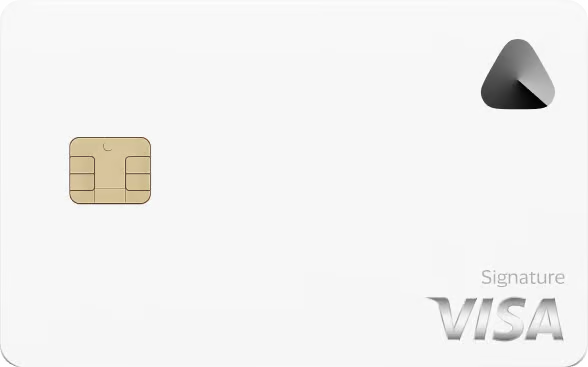
3. Avici Visa Card
Institutional Self-Custody: Multi-Chain USDC Spend

4. Jupiter Global
Spend USDC On-Chain at 150M+ Merchants
Frequently Asked Questions
Why spend stablecoins instead of Bitcoin?
Volatility. When you spend Bitcoin, you risk selling an asset that might appreciate significantly tomorrow. Stablecoins like USDC and USDT are pegged to the dollar, making them ideal for predictable, everyday budgeting.
Are there conversion fees for stablecoin spend?
Yes, though they are often lower. Even stablecoins must be converted to fiat at the point of sale. Most cards charge between 0.2% and 0.9% for this swap, though some premium tiers offer zero-fee stablecoin liquidation.
Which stablecoins are most widely supported?
USDC and USDT are the industry standards. However, in 2026, EURC (Euro-pegged) has gained significant traction for users within the European Economic Area (EEA).
Is stablecoin spending a taxable event?
Technically, yes. In jurisdictions like the US, the IRS treats the disposal of any digital asset as a taxable event. However, since stablecoins don't fluctuate in value, your 'Capital Gain' is typically zero, making the reporting much simpler.