
Best No annual fee Crypto Cards 2026
Crypto cards with zero annual or monthly fees. Compare free cards that still offer cashback, virtual issuance, and global spending.
Free. That word does a lot of heavy lifting in this market. When we started testing cards with the no-annual-fee label, the assumption was simple - $0 per year means $0 per year. Then we ran the numbers on our actual spending and found that one "free" card was costing us $870 a year while another "free" card cost literally nothing. Same $0 annual fee on both. The difference was buried in FX markups and transaction fees that never show up on the marketing page.
This page exists because of that gap. We have tested 40+ cards that charge no annual fee, and the range between "actually free" and "free but quietly expensive" is wider than most people expect. Below, we break down what each card actually costs at your spending level, when upgrading to a paid card makes sense, and the mistakes that catch most users off guard.
Summary:
Which crypto cards are best for no annual fee?
The best crypto cards for no annual fee are Jupiter Global, Coinbase Card (Prepaid Visa), COCA Visa Card, Gemini Credit Card, Gnosis Pay Card, Bitget Card, Kolo Card, and ether.fi Core Card. The full notes and caveats are in the detailed picks below.
| Crypto card | Annual fee | Rewards | FX fee |
|---|---|---|---|
| Free | Up to 10% cashback | 1% / 1.8% | |
| Free | Up to 4% cashback | 0% | |
| Free | Up to 8% cashback | 0% | |
| Free | Up to 4% cashback | 0% | |
| Free | Up to 5% cashback | 0% | |
| Free | Up to 8% cashback | 0% | |
| Free | Up to 2% cashback | 0% | |
| Free | Up to 3% cashback | 1% |
How we ranked these cards
The question this page answers is not "which free card is best" - our main crypto card ranking already covers that. The question is whether you need to pay for a crypto card at all. We ran the break-even math at every spending level from $500 to $8,000 a month, and for most people the answer is no. The free tier is good enough. The ranking below shows which free cards deliver the most value before you ever need to consider upgrading.
Alright, here are our top picks.
Top 9 No annual fee Cards

1. Jupiter Global
Free virtual USDC card with 4% base cashback
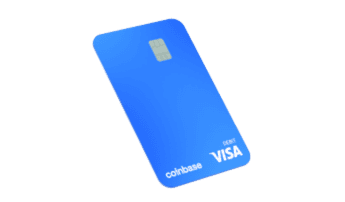
2. Coinbase Card (Prepaid Visa)
Safe & Simple: US Regulated Prepaid Visa with Rotating Crypto Rewards
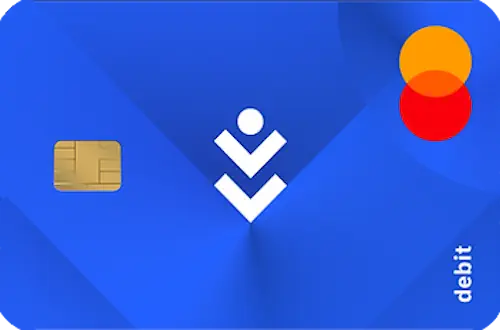
3. COCA Visa Card
Self-Banking: 8% Cashback + 6% APY + 0% FX
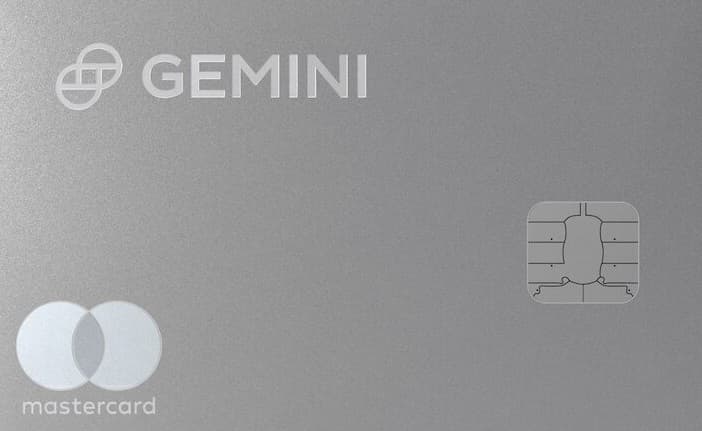
4. Gemini Credit Card
Category Crypto Rewards: 4% Gas/Transit/Rideshare, 3% Dining, 2% Groceries

5. Gnosis Pay Card
Your Keys, Your Card, Your Money

6. Bitget Card
Trade and Spend: Up to 8% BGB Cashback for Bitget Traders
7. Kolo Card
Earn Bitcoin on Purchases: 2% BTC Cashback + Visa Platinum + 170+ Countries

8. ether.fi Core Card
3% Back on Every Purchase, No Stake Required

9. MetaMask Virtual Card
Sovereign Spending: 1% Cashback + Self-Custody + MetaMask Security
How "Free" Cards Actually Make Money
One of the first questions we asked ourselves when testing these cards was: why would the company even release them for free? What we found comes down to four reasons.
Revenue Model 1: Merchant Interchange (Actually Free)
Every time you tap a Visa or Mastercard, the merchant pays 1-3% interchange to the card issuer. Cards that rely solely on interchange (Coinbase, Gnosis Pay, Crypto.com Blue) are free to the cardholder because the merchant absorbs the cost. The issuer makes money on every swipe without charging you a cent.
Revenue Model 2: Growth Phase (Free for Now)
Some issuers are in customer acquisition mode - burning through venture capital to build a user base before introducing fees. We have seen this pattern play out with multiple crypto card startups: launch with zero fees, hit a growth target, then add a subscription or reduce the free tier. If you like one of these cards, get it while it is still free. There is no guarantee the current terms last.
Revenue Model 3: FX Markup (Hidden Cost)
Cards that charge 0.5-2% on foreign currency transactions (RedotPay at 1.2%, ether.fi at 1%, Solflare at 1%). This is invisible on domestic spending but compounds fast for travelers and digital nomads.
Revenue Model 4: Transaction Fee (Per-Swipe Cost)
Bitget Card charges 0.9% on every transaction, reducing its 8% headline cashback to an effective 7.1%. This per-transaction fee erodes cashback directly.
| Revenue Model | Example Cards | Annual Cost on $30K Spend | Annual Cost on $60K Spend |
|---|---|---|---|
| Interchange only | Coinbase, Gnosis Pay, COCA | $0 | $0 |
| 0.9% tx fee | Bitget | $270 | $540 |
| 1% FX | ether.fi, Solflare, xPlace Standard | $300 | $600 |
| 1.2% FX | RedotPay | $360 | $720 |
| 1.75% FX | Ledger CL | $525 | $1,050 |
Our methodology compares total cost, not just the annual fee line. A "free" card with 1.75% FX costs $525/year more than a "free" card with 0% FX. The annual fee is $0 on both, but the total cost is $525 apart.
The Break-Even Framework: Free vs. Paid
The central question for every card user: when does upgrading to a paid card earn more than a free card?
Formula: Break-Even Monthly Spend = Annual Fee / ((Paid Cashback % - Free Cashback %) x 12)
| Free Card | Paid Card | Fee | Free Rate | Paid Rate | Break-Even Spend |
|---|---|---|---|---|---|
| Coinbase (4%) | Wirex Elite (8%) | $360/yr | 4% | 8% | $750/month |
| ether.fi Core (3%) | Ready Metal (3%, 0% FX) | $120/yr | 3% (1% FX) | 3% (0% FX) | Only worth it if 100% international spend |
| Wirex Standard (0.5%) | Plutus (up to 9%) | $240/yr | 0.5% | 3% base | $800/month |
| MetaMask Virtual (1%) | MetaMask Metal (3% first $10K) | $199/yr | 1% | 3%→1% | $830/month |
| Crypto.com Blue (0%) | Crypto.com Ruby (2%) | $50/yr | 0% | 2% | $208/month |
At $500/month spending, Coinbase at 4% free earns $240/year. Wirex Elite at 8% for $360/year earns $480/year minus $360 fee = $120/year. Coinbase wins by $120/year. At $1,000/month, Wirex Elite earns $960 - $360 = $600/year vs Coinbase at $480/year. Wirex wins by $120/year. The crossover point is $750/month.
Worked Examples at Three Spending Levels
Profile 1: $500/month (Beginner)
| Free Card | Monthly Cashback | Annual Return | Hidden Fees | Net Annual Value |
|---|---|---|---|---|
| Coinbase (4%) | $20 | $240 | $0 | $240 |
| Gemini (3% dining, 2% groceries) | $12-15 | $144-180 | $0 | $144-180 |
| Bleap (2%, 10 USDC cap) | $10 (cap) | $120 | $0 | $120 |
| Bitpanda (1%) | $5 | $60 | $0 | $60 |
| Crypto.com Blue (0%) | $0 | $0 | $0 | $0 |
| Bank debit card | $0 | $0 | $0 | $0 |
At $500/month, every free crypto card beats a bank debit card. Coinbase at $240/year is the clear winner for US users. No paid card makes sense at this volume because the annual fee eats most of the extra cashback.
Profile 2: $2,000/month (Regular Spender)
| Free Card | Annual Cashback | Hidden Fees (all int'l) | Net Annual Value | vs Best Paid Card |
|---|---|---|---|---|
| COCA Starter (1%) | $240 | $0 | $240 | Paid wins |
| Coinbase (4%) | $960 | $0 | $960 | Free wins ($960 vs $840 Wirex) |
| Bitget (8%, 0.9% tx) | $1,920 | -$216 tx fee | $1,704 | Free wins |
| ether.fi Core (3%) | $720 | -$240 FX | $480 | Paid wins (Ready Metal $600) |
| MetaMask Virtual (1%) | $240 | -$240 (1% cross-border) | $0 | Paid wins |
At $2,000/month, the free card market becomes powerful. Bitget at effective 7.1% generates $1,704/year and outperforms most paid cards. The only reason to pay for a card at this volume is if you need specific perks like lounge access or 0% FX.
Profile 3: $5,000/month (High Spender)
| Free Card | Annual Cashback | Hidden Fees | Net Annual Value | Best Paid Alternative |
|---|---|---|---|---|
| COCA Starter (1%) | $600 | $0 | $600 | COCA Elite (8%) = $4,800 |
| Coinbase (4%, US-only) | $2,400 | $0 | $2,400 | Wirex Elite (8%, $100/mo cap, $360/yr) = $840 net |
| Bitget (8%, 0.9% tx) | $4,800 | -$540 tx | $4,260 | N/A (already near-top) |
| ether.fi Core (3%) | $1,800 | -$600 FX | $1,200 | Ready Metal (3%) = $1,680 |
At $5,000/month, Bitget at effective 7.1% generates $4,260/year with zero annual fee - outperforming most paid alternatives including Wirex Elite, which caps cashback at $100/month and nets only $840/year after the $360 subscription. For self-custody users, COCA Elite at 8% with COCA tokens outperforms COCA Starter by $4,200/year, making the token purchase pay off. Coinbase at 4% with zero hidden fees remains the strongest US-only option at $2,400/year net.
Named Scenarios: Free Card Math in Practice
Scenario 1: Tomoko, Student in Tokyo Starting with $500/month
Coinbase Card is US-only and not available to a Tokyo resident, so Tomoko picks Bitget Card and KAST instead. She splits spending: $300/month on Bitget (8% BGB, 0% FX, 0.9% tx fee = ~7.1% net) for groceries and subscriptions, and $200/month on KAST Standard (1.5% USD cashback on the first $2,000/month) for dining and transit. Annual fee: $0 on both. KAST FX cost on JPY spending: $12-$42/year (0.5-1.75% on $2,400).
Total annual cashback: ~$255 (Bitget net) + $36 (KAST gross at 1.5% on $2,400) = $291 gross, approximately $249-$279 net after KAST FX. She converts cashback to USDC monthly. Total time spent managing: 10 minutes per week loading stablecoins. See our students guide.
Scenario 2: Andreas, Freelance Developer in Berlin Spending $3,000/month
Andreas uses Bitget Card (7.1% net after 0.9% tx fee) for everything. All domestic and international spending runs at 0% FX. Annual cashback: $2,556. Annual cost: $0.
He considered upgrading to Wirex Elite (8%, $360/year), but at $3,000/month: Wirex earns $2,880 minus $360 fee = $2,520/year (and is capped at $100/month, so actually $840/year after cap). Bitget uncapped at $2,556 beats Wirex capped at $840 by $1,716/year. The free card wins because of the cap on the paid alternative. See our freelancers guide.
Scenario 3: Priya and Ravi, Couple in Dubai Spending $8,000/month
Coinbase Card is US-only, so the Dubai couple picks COCA Starter and Bitget instead. Priya uses COCA Starter (1% free tier, scaling to 8% with $COCA staking, 0% FX) for groceries and subscriptions. Ravi uses Bitget Card (7.1% net, 0% FX) for everything else. Split: $3,000 on COCA ($30/month at 1% Starter), $5,000 on Bitget ($355/month).
Total annual cashback at the free tiers: $360 (COCA Starter) + $4,260 (Bitget net) = $4,620/year. Total cost: $0. No staking, no annual fees, no token risk beyond the cashback itself. In Dubai's 0% tax environment, the cashback is net of everything. If they're willing to stake $COCA tokens, the COCA portion scales to up to 8% (Elite tier requires staking 30K $COCA), pushing combined annual returns above $7,000. They considered Crypto.com Icy White ($40K CRO stake, 5% capped at $50/month = $600/year), but two free uncapped cards outperform it without the staking lock-up. See our couples guide.
Hidden Costs That Make "Free" Cards Expensive
Cost 1: FX Fees on International Spending
| Free Card | FX Fee | Cost on $10K Int'l Spend | Cost on $30K Int'l Spend |
|---|---|---|---|
| Coinbase | 0% | $0 | $0 |
| Gnosis Pay | 0% | $0 | $0 |
| COCA | 0% | $0 | $0 |
| ether.fi | 1% | $100 | $300 |
| RedotPay | 1.2% | $120 | $360 |
| Ledger CL | 1.75% | $175 | $525 |
Cost 2: Cashback Caps That Crush Effective Rates
Bleap caps cashback at 10 USDC/month. At $500/month spending, the effective rate is 2%. At $2,000/month, it drops to 0.5%. Crypto.com Plus caps at $25/month, Crypto.com Pro at $75/month. Always check the monthly cap before committing to a card for its headline rate.
Cost 3: One-Time Issuance Fees
Several "free" cards charge a one-time setup cost: RedotPay Virtual ($10), RedotPay Physical ($100), Avici Platinum physical ($50). These are not annual fees but still add to your first-year cost.
Five Mistakes That Cost Free-Card Users Money
Mistake 1: Choosing a Card for Its Headline Cashback Without Checking Fees
Bitget Card advertises 8% cashback, but the 0.9% transaction fee reduces the effective rate to 7.1%. On $30,000/year spending: $270 lost to transaction fees.
How to avoid it: Always subtract all fees from the cashback rate: effective rate = headline rate - FX fee - transaction fee. A card at 8% with 0.9% tx fee and 0% FX = 7.1% effective. A card at 5% with 0% everything = 5% effective. See the cashback guide for the full methodology.
Mistake 2: Staying on a Free Card When Spending $3,000+/month on a Low-Rate Free Card
At $3,000/month, staying on COCA Starter (1% free) instead of upgrading to Bitget (7.1% net, also free) costs you $2,196/year in missed cashback. Many users stick with their first card out of inertia.
How to avoid it: Re-evaluate your card annually. Run the break-even formula for every free and paid card in your region. Note: many "upgrades" are to other free cards, not paid ones. Bitget and Coinbase are both free and outperform most paid alternatives at moderate spending. The high-spender guide covers premium card math.
Mistake 3: Using One Card for Everything Including International
A single free card with 1% FX costs $300/year on $30,000 in international spending. A second free card with 0% FX eliminates that cost entirely.
How to avoid it: Two free cards beat one free card for mixed domestic/international spending. Pair Bitget (7.1% net, 0% FX, domestic + international) with COCA Starter (1%, 0-1% FX) as a backup. Or use a single 0% FX card for everything.
Mistake 4: Ignoring Regional Availability Before KYC
Coinbase and Gemini are US-only. Gnosis Pay and Bleap are EEA-only. Ready Lite is EEA/UK only.
How to avoid it: Check the country pages first. Completing KYC on a card that does not serve your country wastes time and shares personal data unnecessarily.
Mistake 5: Loading Volatile Crypto Instead of Stablecoins
A free card funded with BTC loses 5% of your spending power when BTC drops 5% overnight. Your $1,000 balance becomes $950 before you buy anything.
How to avoid it: Fund with USDC or USDT to keep $1 = $1. Use volatile assets for investing, stablecoins for spending. See our tax-conscious guide for why this also simplifies tax reporting.
The Verdict
The best no-annual-fee card is not the one with the highest headline cashback rate. It is the one where (Cashback - FX Fees - Transaction Fees - Conversion Costs) = Highest Positive Number at your actual spending volume.
Coinbase at 4% with zero hidden fees beats Bitget at 8% with 0.9% transaction fee for anyone spending under $1,500/month. COCA Starter at 1% with 0-1% FX is comparable to ether.fi Core at 3% with 1% FX for digital nomads who spend heavily abroad - both now charge 1% on indirect currency pairs. Check the fees, run the math at your volume, and upgrade to a paid card only when the break-even formula says the paid card pays for itself in 6 months or less.
Disclaimer: SpendNode is a data comparison platform. We are not financial advisors. Crypto cards involve risks including asset volatility, custodial risk, and tax complexity. Verify all terms directly with issuers before applying.
Written by Aleksandar Dukic
Frequently Asked Questions
Are no-annual-fee crypto cards really free?
The card itself costs zero per year. But issuers make money through FX fees (0.5-2%), conversion spreads, ATM surcharges, and merchant interchange. A card with 0% annual fee but 2% FX costs $600/year on $30,000 in international spending. Check the total cost, not just the annual fee line.
Can I get cashback on a free crypto card?
Yes. Coinbase offers 4%, ether.fi Core offers 3%, Bleap offers 2%, and COCA Starter offers 1%, all with zero annual fee. The best free cards outperform many paid cards at spending volumes below $2,000/month.
Do no-annual-fee cards require staking?
Most do not. Coinbase, MetaMask, Bitpanda, Wirex Standard, and RedotPay require zero staking. Some cards like COCA have optional token-staking tiers that increase cashback, but the base free tier works without any commitment.
What is the best free crypto card for US residents?
Coinbase Card (4% rotating cashback, 0% FX, Visa) and Gemini Credit Card (up to 4% category rewards, 0% FX, Mastercard) are the strongest US options. Gemini is a true credit card that does not require crypto funding.
When should I upgrade to a paid card?
When the extra cashback from the paid tier exceeds the annual fee at your actual monthly spending. For example, upgrading from Coinbase (4% free) to Wirex Elite (8%, $360/year) earns an extra $1,440/year at $3,000/month spending. The upgrade pays for itself in 3 months.
Do free cards come with a physical card?
Most issue a virtual card instantly and offer a physical card for free or a small shipping fee. Coinbase, Crypto.com Midnight Blue, Bitpanda, and Wirex Standard all include free physical cards. MetaMask Virtual is virtual-only (Metal is $199/yr). RedotPay charges $100 for the physical version.
Are there free self-custodial crypto cards?
Yes. MetaMask Virtual (1%, 1% cross-border, broad supported-market reach), Bleap (2% capped, 0% FX, EEA), ether.fi Core (3%, global), COCA Starter (1%, 0-1% FX, 70 countries), Ready Lite (0.5%, EEA/UK), and Gnosis Pay (up to 5%, EEA/UK) are all free and self-custodial.
Do free crypto cards work with Apple Pay and Google Pay?
Most do. Coinbase, MetaMask, ether.fi, Bitget, COCA, Bleap, Ready Lite, and xPlace all support Apple Pay, Google Pay, or both with zero annual fee.