What Happened
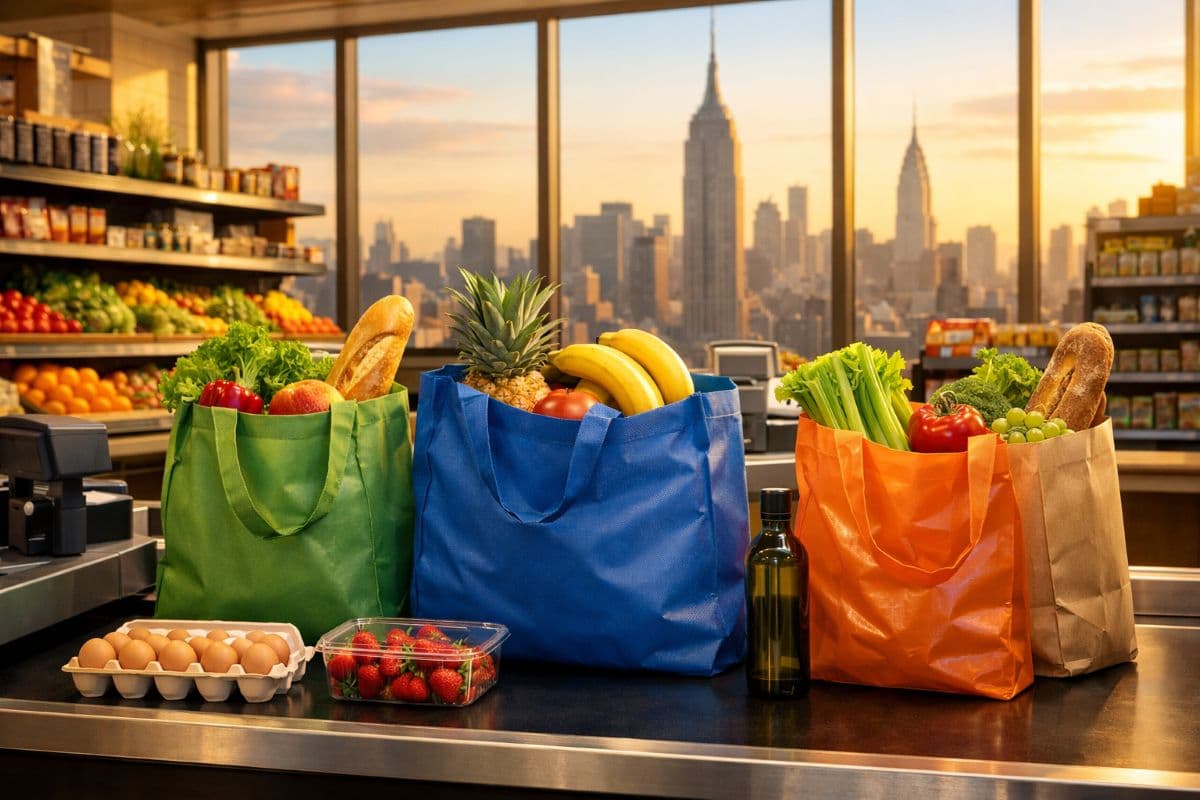
Prediction market platform Kalshi turned a Manhattan supermarket into a free grocery store on February 3, 2026. The CFTC-regulated exchange covered the tab for up to $50 in groceries per customer at Westside Market in the East Village, with a total budget of $50,000.
The promotion ran from noon to 3pm at the store's 84 Third Avenue location on a first-come, first-served basis. No app download, no sign-up, no strings attached. Customers simply filled their baskets and checked out for free.
Kalshi CEO Tarek Mansour framed the move as community outreach: "The winter has been cold and difficult for many. We hope this helps a little. New York has given Kalshi so much. It's only fair for Kalshi to give to New York."
The company also set up prediction market displays inside the store featuring questions like "Will the price of eggs go up this month?" and "Will Mamdani freeze the rent this year?", turning an ordinary grocery run into a live product demonstration.
Why People Care
This is not just a feel-good grocery giveaway. It is a calculated opening shot in the 2026 prediction market platform wars.
Kalshi and Polymarket are locked in an intensifying battle for market dominance. Between them, these two platforms process billions in monthly trading volume across politics, sports, economics, and culture. The stakes are enormous: NYSE parent company ICE has invested $2 billion in Polymarket, while Kalshi closed a $300 million Series D at a $5 billion valuation.
The free grocery stunt is a direct play for mainstream consumer awareness. Prediction markets are still niche despite their rapid growth. Most Americans have never placed a trade on Kalshi or Polymarket. By meeting people where they already are (the supermarket), Kalshi is attempting to bridge the gap between crypto-native traders and everyday consumers.
The timing is also strategic. The CFTC announced in late January that it will write new rules for prediction markets in 2026, and Kalshi is positioning itself as the responsible, consumer-friendly platform in advance of that regulatory framework.
The Details
The Promotion Mechanics
The structure was straightforward:
- Location: Westside Market, 84 Third Avenue, East Village, Manhattan
- Time: 12pm to 3pm, February 3, 2026
- Per-person limit: $50 in free groceries
- Total budget: $50,000
- Eligibility: Anyone who shows up. No account required.
At the theoretical maximum of $50 per person, the $50,000 budget covers roughly 1,000 customers. In practice, many baskets likely came in under $50, potentially stretching the promotion further.
The In-Store Experience
Kalshi did not simply pay grocery bills and leave. The company installed prediction market displays throughout the store, featuring contracts tied to everyday life: egg prices, rent freezes, and other New York City-specific outcomes. This transforms a passive marketing event into an interactive product demo.
The approach is clever because it grounds abstract financial instruments in tangible reality. "Will eggs cost more next month?" is a question every grocery shopper already asks themselves. Kalshi is simply offering a way to put money on the answer.
Kalshi vs. Polymarket: Platform Comparison
The prediction market duopoly has distinct characteristics:
Kalshi is CFTC-regulated as a Designated Contract Market, available to US residents, processes trades in USD, and generates roughly 90% of its revenue from sports contracts. It has formal partnerships with CNN and CNBC.
Polymarket operates on the Polygon blockchain, recently received a $2 billion investment from NYSE parent ICE, and built its reputation during the 2024 US presidential election cycle. Polymarket was cleared to resume US operations following a CFTC reversal, putting it in direct competition with Kalshi on home turf.
Both platforms are fighting for the same prize: becoming the default destination for Americans who want to trade on real-world outcomes.
What This Means for Your Money
The prediction market boom has real financial implications for consumers:
Trading opportunities. Platforms like Kalshi offer binary contracts on economic indicators (inflation, unemployment, interest rate decisions) that were previously inaccessible to retail traders. A $50 grocery giveaway is the entry point, but the product behind it lets users hedge against or speculate on economic outcomes.
Marketing budget wars benefit consumers. When well-funded platforms compete for market share, promotions, fee reductions, and incentives follow. Kalshi's $50K grocery stunt may be the start of an aggressive promotional cycle similar to what ride-sharing and food delivery apps went through during their growth phases.
Regulatory clarity is coming. The CFTC's decision to write new prediction market rules in 2026 should create clearer guidelines around what contracts are permissible, how customer funds are protected, and what disclosures are required. For traders, this means more certainty and potentially more mainstream adoption.
What This Means for Crypto Users
Prediction markets sit at the intersection of crypto and traditional finance. Polymarket runs on Polygon, while Kalshi operates in regulated USD markets. As these platforms compete, crypto users benefit in several ways.
On-chain prediction markets gain legitimacy. Every mainstream marketing push by Kalshi or Polymarket normalizes the concept of trading on outcomes, which drives curiosity toward on-chain alternatives.
Wallet and spending integration. As prediction markets grow, expect tighter integration with crypto wallets and payment cards. The ability to fund trades from a crypto card or withdraw winnings to a self-custody wallet creates natural synergies with the broader crypto spending ecosystem.
The stablecoin connection. Polymarket already settles in USDC on Polygon. As on-chain prediction markets scale, stablecoin demand increases, which benefits the entire crypto ecosystem.
FAQ
Did Polymarket launch the free grocery store? No. Despite some initial reports attributing this to Polymarket, the free grocery promotion was organized and funded by Kalshi, a competing prediction market platform. Both are major players in the prediction market space, but this specific event was a Kalshi initiative.
Is Kalshi a crypto platform? Kalshi is a CFTC-regulated prediction market exchange that operates in USD. It is not a cryptocurrency platform, but it competes directly with blockchain-based prediction markets like Polymarket. The broader prediction market category spans both crypto and traditional finance.
Can I still get free groceries? The promotion was a one-time event on February 3, 2026, limited to $50,000 total. Once the budget was exhausted, the promotion ended. Kalshi has not announced plans for repeat events.
How do prediction markets work? Users buy binary "yes" or "no" contracts on the outcome of real-world events. If your prediction is correct, the contract pays out. If not, you lose your stake. Contracts cover politics, economics, sports, weather, and more.
Overview
Kalshi spent $50,000 giving away free groceries at a Manhattan supermarket on February 3, 2026, turning an East Village Westside Market into a live prediction market demo. The CFTC-regulated platform covered $50 per customer in groceries while showcasing prediction contracts on everyday topics like egg prices and rent freezes. The move is a customer acquisition play in the escalating battle between Kalshi and Polymarket for prediction market dominance, as both platforms process billions in monthly volume and the CFTC prepares to write new industry rules in 2026. For crypto users, the mainstream push for prediction markets drives stablecoin adoption, wallet integration opportunities, and broader acceptance of on-chain financial products.
Recommended Reading
- Compare Crypto Cards with Cashback Rewards
- Stablecoin-Friendly Crypto Cards
- Rainbow's $RNBW Token CCA Auction Is Live on Uniswap