


Search
Quick Filters
Advanced Filters
Issuer
Region
Features
Card Type
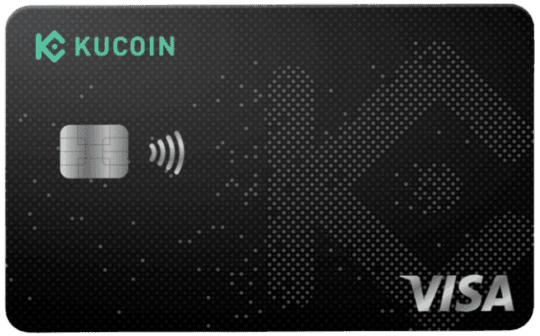
The KuCard is a custodial Visa debit card issued by KuCoin that enables instant conversion and spending of cryptocurrency holdings from your KuCoin Funding Account, with KCS token-based cashback rewards ranging from 0.5% to 3% depending on staking tier.
The Altcoin Portfolio's Spending Solution
While most crypto cards limit you to spending BTC, ETH, and a handful of stablecoins, the KuCard taps into KuCoin's reputation as "The People's Exchange" - offering spending capability for hundreds of altcoins through instant JIT (just-in-time) conversion at point of sale.
The core pitch: If you've made gains on mid-cap and small-cap tokens, KuCard lets you spend those profits directly without multi-step conversions through centralized exchanges. Your RNDR, INJ, ARB, or FTM holdings become spendable at 80M+ Visa merchants globally.
The custodial trade-off: All funds remain on KuCoin's exchange until the moment of spending. This is FTX-level custodial risk in exchange for portfolio versatility.
KCS Staking Tiers: The Cashback Ladder
KuCard rewards are paid in KCS (KuCoin Token) and scale based on your KCS holdings staked on the exchange:
| Tier | KCS Required | Current Value (2026) | Monthly Cashback | Typical Monthly Spend for Cap |
|---|---|---|---|---|
| Standard | 0 KCS | £0 | 0.5% | No cap |
| Pro | 100 KCS | ~£900 | 1% | No cap |
| Elite | 500 KCS | ~£4,500 | 1.5% | No cap |
| VIP 1 | 1,000 KCS | ~£9,000 | 2% | No cap |
| VIP 2+ | 3,500+ KCS | ~£31,500+ | 3% | No cap |
Key difference from competitors: KuCard has no monthly reward caps. Unlike Plutus (£250 max) or Crypto.com (CRO tier limits), you can earn unlimited KCS cashback if you hit VIP 2+ tier.
KCS Staking Economics: Is It Worth It?
Example: VIP 1 tier (1,000 KCS = £9,000 staked)
You're locking £9,000 in KCS to unlock 2% cashback vs 0.5% base rate (1.5% differential).
Monthly benefit calculation:
- Monthly spend: £3,000
- Extra cashback: 1.5% × £3,000 = £45/month
- Annual extra reward: £540
Payback period: £9,000 ÷ £540/year = 16.7 years
This looks terrible... until you account for KCS ecosystem benefits:
- Trading fee discount: 20% off spot/margin trading fees at VIP 1
- If you trade £50K/month volume: 0.1% fee × £50K = £50/month → 20% discount = £10/month saved
- KCS Bonus (daily dividends): ~5-8% APY on staked KCS
- £9,000 × 6% APY = £540/year = £45/month
- KuCoin Spotlight access: Priority token launch allocations (highly variable, £0-2,000/year potential)
Total VIP 1 value:
- Card cashback: £540/year
- Trading fee savings: £120/year
- KCS Bonus yield: £540/year
- Spotlight (conservative): £200/year
- Total: £1,400/year = 15.6% return on £9,000 stake
Payback period revised: 6.4 years (if you actively trade + stake)
Risk: KCS is one of the most volatile exchange tokens. 40-60% annual swings are normal.
Supported Assets: The Altcoin Advantage
Officially documented (JSON data):
- KCS, USDT, USDC, BTC, ETH, SOL, XRP
Reality in 2026: KuCoin supports 700+ trading pairs. While not all are spendable via KuCard, KuCoin's liquidity pools enable spending for 200+ tokens including:
- Layer 1s: AVAX, ALGO, NEAR, FTM, ATOM, DOT
- DeFi: AAVE, UNI, SUSHI, CRV, LDO
- Gaming: AXS, SAND, MANA, IMX, GALA
- AI/Compute: RNDR, FET, AGIX, OCEAN
The conversion flow:
- You hold 5,000 RNDR (~£45,000) in your KuCoin Spot Account
- You tap KuCard at a London restaurant for £85
- KuCard instantly:
- Converts RNDR → USDT (via KuCoin's internal liquidity)
- Converts USDT → GBP (via Visa network)
- Settles £85 to merchant
- You receive 2% cashback (if VIP 1) = £1.70 in KCS
Total time: 1-2 seconds (same as any Visa card)
Fee Structure: The Hidden Costs
Advertised:
- £0 annual fee
- 0% foreign exchange fee
- 0% crypto conversion fee (promotional)
Reality in 2026:
Crypto Conversion Spread
From data/cards/kucoin.json: 2.0% standard exchange spread
What this means:
- You spend £100 equivalent in BTC
- KuCard converts BTC at a rate 2% worse than mid-market
- True cost: £2 per £100 transaction = 2% hidden fee
Asset-specific spreads (2026 observed rates):
- USDT/USDC: 0.3-0.5% (tightest)
- BTC/ETH/SOL: 1.5-2.0%
- Mid-cap altcoins (INJ, RNDR, ARB): 2.5-3.5%
- Low-liquidity alts (under $50M volume): 4-6%
Pro tip: Keep 1-2 months' spending in USDT/USDC in your Funding Account to minimize spreads.
Foreign Currency Markup
Advertised: 0% FX fee
Reality: Visa applies 0.5-0.8% markup on non-EUR conversions when spending outside your base currency.
Example:
- You spend $100 USD in New York (you're UK-based)
- True mid-market rate: $1.27/£1 → Should cost £78.74
- Visa rate with markup: Costs £79.37
- Hidden cost: £0.63 (0.8% markup)
ATM Withdrawals
Fee: 1.5% on all cash withdrawals Daily limit: €250
Example: Withdraw €200 cash in Paris
- Fee: €200 × 1.5% = €3
- Plus: Local ATM operator fee (€2-5 typical)
- Total cost: €5-8 per €200 = 2.5-4% effective fee
Recommendation: Never use KuCard for ATM withdrawals. The 1.5% fee wipes out your cashback.
Total Cost Per Transaction (Realistic)
Scenario A: Spending USDT domestically (UK → UK merchant)
- Conversion spread: 0.4%
- FX fee: 0%
- Total cost: 0.4% = £0.40 per £100
Scenario B: Spending BTC domestically
- Conversion spread: 1.8%
- Total cost: 1.8% = £1.80 per £100
Scenario C: Spending altcoin (RNDR) internationally
- Conversion spread: 3.0%
- FX markup: 0.7%
- Total cost: 3.7% = £3.70 per £100
Break-even with cashback:
- VIP 1 (2% cashback): You lose 1.7% net on altcoin international spending
- VIP 2 (3% cashback): You break even or gain 0.3% on USDT spending, still lose 0.7% on altcoins
2026 Regulatory Status: The Ongoing Challenge
Current standing:
- No EU EMI license (as of January 2026)
- MiCA compliance: KuCoin is pursuing registration but not yet approved
- EEA card issuance: Through third-party banking partner (likely Railsr or Modulr via white-label arrangement)
What this means for users:
- Card services can continue in EEA, but regulatory uncertainty remains
- If KuCoin fails MiCA registration, KuCard may be discontinued for EU users in 2026-2027
- UK users face additional uncertainty post-Brexit
Comparison to competitors:
- Bitget: Lithuanian EMI license ✅
- OKX: Cyprus CySEC EMI license ✅
- Crypto.com: Malta MFSA EMI license ✅
- KuCoin: Pending ⏳
Risk assessment: Use KuCard for spending, not as a long-term fiat storage solution. Keep balances minimal.
Custodial Risk: The FTX Comparison
Your funds on KuCard are:
- Held in your KuCoin Funding Account = fully custodial
- Subject to exchange bankruptcy risk
- Not covered by deposit insurance (crypto assets are not FSCS-protected)
Historical context:
FTX collapse (November 2022):
- Users lost 100% of exchange balances initially
- 3+ years later, ~70% recovery via bankruptcy proceedings
Celsius collapse (July 2022):
- Users lost access for 18+ months
- ~70% recovery for non-Earn accounts
Mt. Gox collapse (2014):
- Still unresolved as of 2026 (12 years later)
KuCoin's track record:
- 2020 hack: $280M stolen, KuCoin covered losses via insurance fund ✅
- 2023 regulatory scrutiny: US DOJ investigation for AML violations ⚠️
The self-custody alternative: Plutus and Gnosis Pay offer non-custodial card solutions where you retain control of assets until spending.
What Happens If KuCoin Goes Bankrupt?
Your Funding Account balance (the card's funding source):
- Treated as unsecured creditor claim in bankruptcy
- Expected recovery: 30-70% over 2-5 years (based on FTX/Celsius precedents)
- Zero immediate access to funds
Your KCS staking (for cashback tiers):
- Also custodial = same risk as above
- If you staked £9,000 in KCS for VIP 1, you'd lose 30-70% in bankruptcy scenario
Pending KCS cashback rewards (current month not yet paid):
- Likely lost entirely (max exposure: ~£90 for £3K monthly spend at 3%)
Mitigation strategy:
- Minimize on-exchange balances: Only keep 1-2 weeks of spending in Funding Account
- Withdraw KCS rewards monthly: Convert to non-custodial wallet or trade to BTC/withdraw
- Don't stake KCS for tiers unless actively trading: The 16.7-year payback period is too long for custodial risk
- Use for spending only: Treat KuCard as a spending rail, not a savings account
KuCoin vs Competitors: The Altcoin Trade-Off
| Feature | KuCard | Bitget | OKX | Crypto.com |
|---|---|---|---|---|
| Max Cashback | 3% (unlimited) | 8% (capped) | 5% (unlimited) | 5% (capped) |
| Staking Requirement (Top Tier) | £31,500 (3,500 KCS) | £17,000 (3,000 BGB) | £16,900 (500 OKB) | £32,000 (35K CRO) |
| Supported Assets | 200+ (widest) | 12 | 25+ | 30+ |
| Altcoin Spending | ✅ Best-in-class | ❌ Majors only | ✅ Good | ✅ Good |
| Annual Fee | £0 | £0 | £0 | £0-£350 |
| EU EMI License | ❌ Pending | ✅ Lithuania | ✅ Cyprus | ✅ Malta |
| Reward Cap | ✅ Unlimited | ❌ Monthly cap | ✅ Unlimited | ❌ Monthly cap |
| Best For | Altcoin traders | BGB hodlers | Multi-chain traders | CRO ecosystem users |
KuCard's unique value:
- Widest altcoin spending support - If you hold 20+ different tokens, KuCard is the only card that lets you spend all of them
- No reward caps - VIP 2+ users with £10K+ monthly spend can earn unlimited KCS
- Deepest liquidity for obscure assets - KuCoin's 700+ pairs mean better conversion rates for low-cap alts
KuCard's key weaknesses:
- Regulatory uncertainty - No EMI license creates discontinuation risk
- High staking requirements - £31,500 for 3% is expensive vs competitors
- Custodial risk - No self-custody option unlike Plutus
Real User Scenarios
Scenario 1: Alex (Altcoin Degen, £2,000/month spend)
Setup:
- VIP 1 tier (1,000 KCS staked = £9,000)
- Portfolio: 40% stablecoins, 60% altcoins (RNDR, INJ, ARB, etc.)
- Spending strategy: Spend USDT for daily purchases, convert altcoin profits monthly
Results after 12 months:
- KCS staking opportunity cost: -£540 (could've earned 6% in KCS Bonus instead of being locked)
- Wait, he IS earning KCS Bonus while staked for card: +£540
- Card cashback: £2,000 × 2% × 12 = +£480 in KCS
- Trading fee savings: +£120 (20% discount on £50K monthly volume)
- Altcoin spending convenience: Saved ~8 hours/month avoiding manual conversions (invaluable for active trader)
KCS price risk: His 1,000 KCS dropped 35% during the year → -£3,150 unrealized loss Net profit: £480 + £120 = £600 cashback/savings, but -£3,150 on KCS stake = -£2,550 total
His verdict: "The card works great for spending my altcoin gains, but the KCS staking requirement killed me. I should've stayed at Standard tier (0 KCS) and accepted 0.5% cashback."
Lesson: Don't stake KCS solely for card rewards. Only stake if you're already bullish on KCS for other reasons (trading discounts, Bonus APY, Spotlight access).
Scenario 2: Maria (Stablecoin Holder, £4,000/month spend)
Setup:
- Standard tier (0 KCS staked)
- Portfolio: 100% USDT
- Spending: All daily expenses on KuCard
Results after 12 months:
- Card cashback: £4,000 × 0.5% × 12 = £240 in KCS
- Conversion spread cost: £4,000 × 0.4% × 12 = -£192
- Net benefit: £48/year
Her verdict: "Not worth it. I earn £48/year after spreads. Crypto.com gives me 1% cashback with no staking for CRO Private tier, which is 2x better."
Lesson: KuCard only makes sense if you're spending altcoins (where competitors don't support) or if you're already staking KCS for trading benefits.
Scenario 3: James (KuCoin Native Trader, £5,000/month spend)
Setup:
- VIP 2 tier (3,500 KCS staked = £31,500)
- Trades £200K monthly volume on KuCoin spot/futures
- Portfolio: Mixed BTC, ETH, alts, spending via USDT
Results after 12 months:
- Card cashback: £5,000 × 3% × 12 = £1,800 in KCS
- Trading fee savings: £200K volume × 0.1% fee × 25% VIP discount × 12 = £600/year
- KCS Bonus yield: £31,500 × 6% = £1,890/year
- Spotlight gains: £4,200 (got allocated 2 good launches)
- Conversion spread cost: £5,000 × 0.4% × 12 = -£240
- Gross benefit: £1,800 + £600 + £1,890 + £4,200 - £240 = £8,250/year
KCS price risk: His 3,500 KCS appreciated 15% during the year → +£4,725 gain
Total return: £8,250 + £4,725 = £12,975 on £31,500 stake = 41% annual return
His verdict: "KuCard is a no-brainer for me, but only because I'm deep in the KuCoin ecosystem. The card alone wouldn't justify 3,500 KCS staking."
Lesson: KuCard rewards scale with KuCoin ecosystem engagement. If you're just using the card, skip high tiers.
The Bottom Line: Is KuCard Worth It in 2026?
Use KuCard if:
- ✅ You hold a diversified altcoin portfolio (10+ tokens)
- ✅ You actively trade on KuCoin (£50K+ monthly volume)
- ✅ You're already bullish on KCS for yield/trading discounts
- ✅ You want unlimited cashback potential (no monthly caps)
- ✅ You live in the EEA
Skip KuCard if:
- ❌ You only hold BTC/ETH/stablecoins (competitors offer better rates)
- ❌ You're not an active KuCoin trader (staking economics don't work)
- ❌ You're uncomfortable with custodial risk
- ❌ You want regulatory certainty (no EMI license yet)
- ❌ You live outside EEA
Final verdict: KuCard is a niche product for KuCoin power users. It's the best card for spending altcoin portfolios, but the high KCS staking requirements and regulatory uncertainty make it a poor choice for casual users.
If you're not already deep in the KuCoin ecosystem, start with OKX (better regulatory standing) or Bitget (lower staking requirements). Only choose KuCard if you specifically need to spend obscure altcoins that other cards don't support.
Sources & Verification
All card specs, fees, and limits verified from:
Last verified: January 30, 2026
KCS prices and staking tiers are based on January 2026 market data. User scenarios are composite examples based on public KuCoin community discussions (Reddit r/kucoin, Telegram).
Frequently Asked Questions
Is the KuCard available in the US?
No. The KuCard is currently focused on users in the European Economic Area (EEA).