The current state of "Know Your Customer" (KYC) is a privacy nightmare. Every time you sign up for a new crypto card, you are forced to upload a high-resolution scan of your passport to a centralized server, hoping the company's database isn't hacked. In 2026, the shift toward Self-Sovereign Identity (SSI) and Zero-Knowledge KYC (ZK-KYC) is finally offering a way to be compliant without being exposed.
Why This Topic Matters Now
Data breaches are at an all-time high. For a crypto user, having their "Passport + Crypto Balance" leaked is a targeted kidnapping risk. SSI allows a user to prove they are "Over 18" or a "Resident of Germany" without ever sharing their actual date of birth or home address with the card issuer.
The urgency has escalated following several major KYC provider breaches in 2024-2025, exposing the identity documents of over 15 million crypto users globally. Combined with on-chain wallet balances, this data created a "kidnapping database" that led to a documented increase in $5 wrench attacks and targeted phishing campaigns.
Core Explanation (Direct Answer Format)
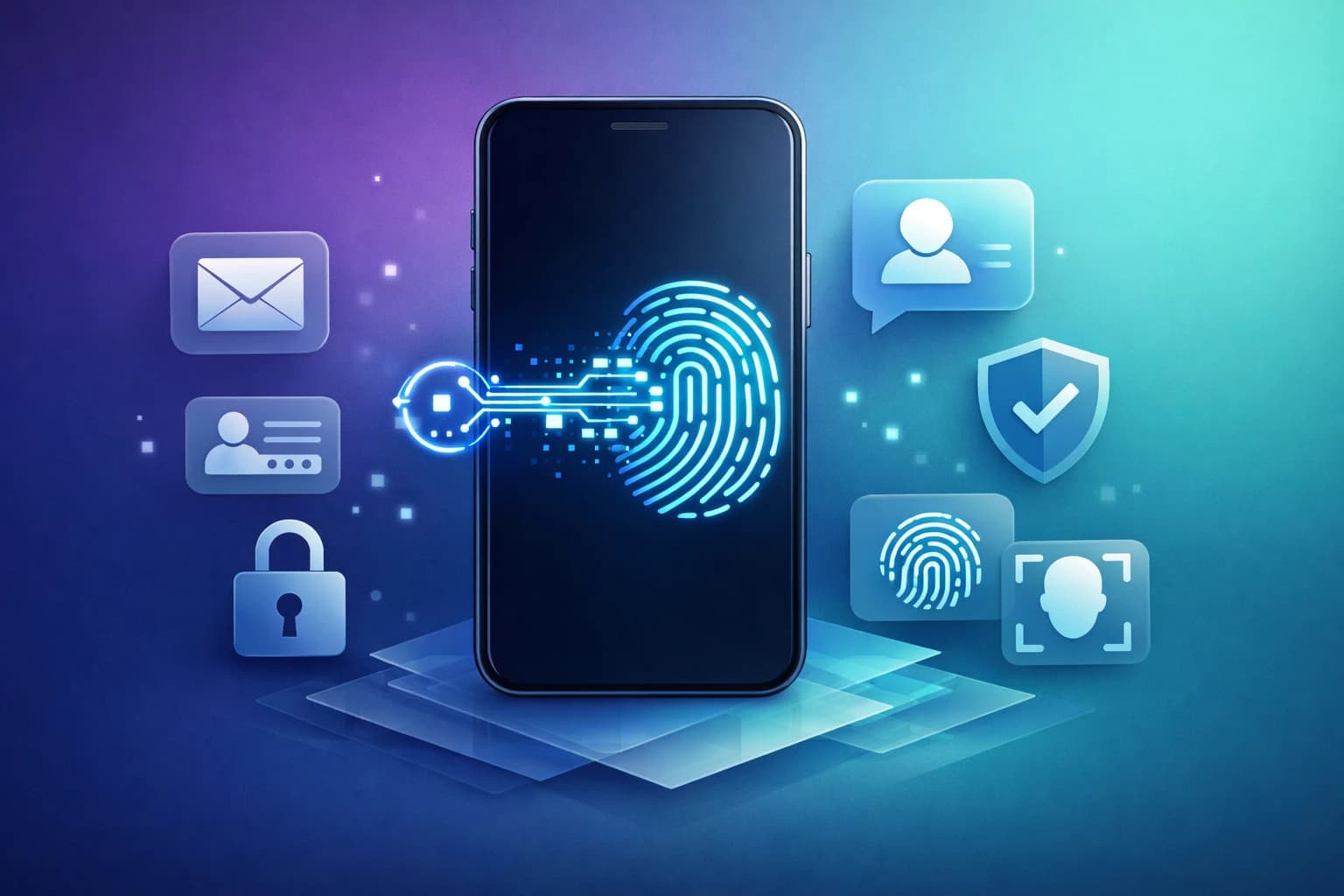
Self-Sovereign Identity (SSI) is a model where the individual "owns" their identity data in a digital wallet. To get a crypto card, you don't "Send" your data; you "Present" a cryptographically signed proof that an authorized entity (like a government or a bank) has already verified you.
ZK-KYC (Zero-Knowledge)
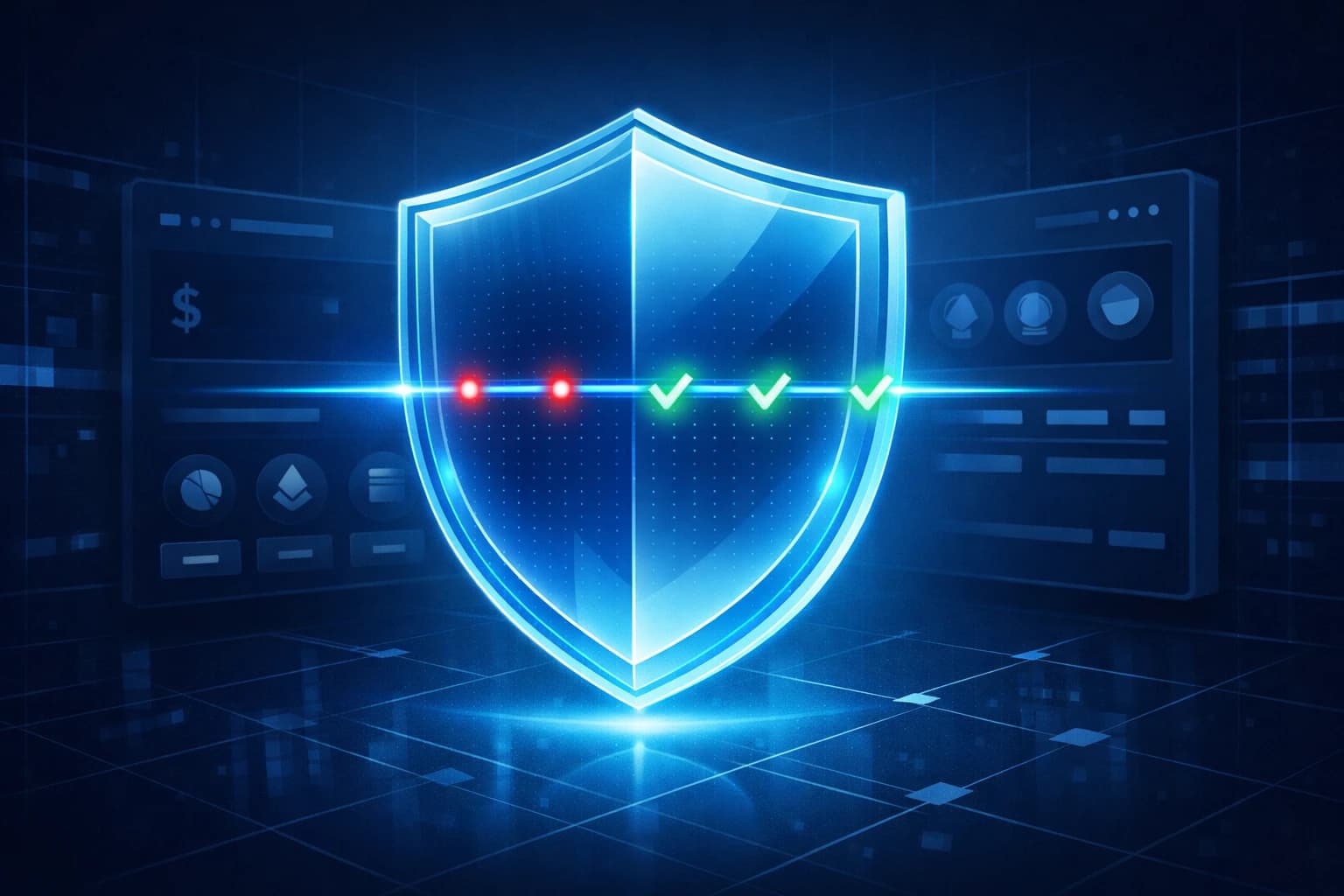
With Zero-Knowledge Proofs (ZKPs), the card issuer's app asks a question: "Is this person on a sanctions list?" Your identity wallet calculates the answer locally on your device and returns a "Yes/No" proof. The issuer never sees your name or ID number, but they have a mathematical guarantee that you are a "Clean" user.
Technical Implementation:
User Identity Wallet (Mobile)
    ↓
Contains: Signed Credential from Government/Bank
    ↓
Card Issuer API: "Prove you are 18+ and not sanctioned"
    ↓
ZK Circuit Computation (Local)
    ↓
Output: Proof (Yes/No) + No Personal Data
    ↓
Issuer Verifies Proof → Approves Card
The magic of zero-knowledge is that the issuer receives cryptographic certainty without receiving data. The proof is unfalsifiable (requires government's private key to forge) yet reveals nothing about the individual beyond the specific claim verified.
Re-usable Identity
Instead of doing KYC 20 times for 20 different cards, you do it once with a trusted "Identity Issuer" (e.g., Polygon ID, Privy, or World ID). You then use that "Credential" to instantly unlock any crypto card that accepts the SSI standard.
User Journey:
- Bootstrap: User completes full KYC once with Identity Provider (government, bank, or trusted verifier)
- Credential Issuance: Provider signs a verifiable credential stored in user's digital wallet
- Card Sign-up: User visits card issuer website, clicks "Verify with SSI"
- Proof Generation: Wallet creates proof satisfying issuer's requirements
- Instant Approval: Card issued within 10 seconds if proof valid
Detailed SSI Protocol Comparison
| Protocol | Developer | Blockchain | KYC Method | Privacy Level | Adoption (Cards) | Cost per Verification |
|---|---|---|---|---|---|---|
| Polygon ID | Polygon Labs | Polygon | ZK-SNARK | Very High | Gnosis Pay, 1inch | $0.02 - $0.10 |
| Worldcoin | Tools for Humanity | Optimism | Biometric (Orb) | Medium | Ether.fi (Pilot) | Free |
| Privy | Privy Inc. | Multi-chain | Social + Gov ID | Medium-High | Multiple DeFi cards | $0.50 - $2.00 |
| zkPass | zkPass Team | Ethereum | ZK-TLS | Very High | Bybit (Testing) | $0.15 - $0.30 |
| Civic Pass | Civic | Solana/Ethereum | ZK + Biometric | High | Solflare | $0.25 - $0.80 |
| Fractal ID | Fractal | Multi-chain | Traditional + ZK | Medium | Ledger CL | $1.00 - $3.00 |
| Gitcoin Passport | Gitcoin | Ethereum | Social Stamps | Low-Medium | None (Experimental) | Free |
| Hyperlane ID | Abacus | Omnichain | Attestations | High | Future adoption | $0.10 - $0.50 |
Protocol Analysis:
Polygon ID leads in production adoption with mature ZK-SNARK infrastructure. Users create credentials from government IDs via NFC passport scanning, then generate proofs for age, residency, and sanctions screening without revealing underlying documents.
Worldcoin offers the most frictionless user experience (2-second biometric scan) but faces controversy over centralized Orb hardware and biometric data storage. Privacy advocates criticize the "proof of personhood" model as surveillance infrastructure.
Privy balances compliance and UX by allowing users to start with social verification (email + phone) then upgrade to government ID for higher limits. Popular with newer card issuers due to developer-friendly APIs.
zkPass uses Transport Layer Security (TLS) to prove identity without revealing it—user can prove "I have a Gmail account" or "I have a US bank account" by revealing encrypted session data that the issuer can verify came from Gmail/bank servers without seeing the actual credentials.
Privacy Trade-offs Table
| Dimension | Traditional KYC | SSI (Basic) | SSI (Zero-Knowledge) |
|---|---|---|---|
| Data Shared with Issuer | Full (Name, DOB, Address, ID Photo) | Minimal (Hash + Attestation) | Zero (Only Proof) |
| Data Stored by Issuer | Permanent database | Encrypted pointer | Nothing |
| Breach Impact | Total exposure | Encrypted data leak | No data to breach |
| Regulatory Compliance | ✓ High | ✓ Medium (Growing) | ~ Untested (2026) |
| User Recovery | Support ticket | Self-custody backup | Hardware wallet required |
| Sybil Resistance | High | Medium | High (biometric) |
| Setup Time | 5-15 minutes | 2-5 minutes | 10 seconds (reuse) |
| Ongoing Monitoring | Continuous (AML) | Snapshot-based | Proof re-verification |
Key Insight: SSI shifts risk from centralized data honey pots to user-controlled wallets. While this improves privacy, it introduces new responsibilities: users who lose seed phrases lose their identity credentials permanently.
Regulatory Compliance Analysis by Jurisdiction
European Union (eIDAS 2.0 + MiCA)
Status: Most Progressive Framework: eIDAS 2.0 mandates all EU member states issue digital identity wallets by 2027
Compliance Path:
- Card issuers can accept government-issued eIDAS credentials
- ZK-proofs must demonstrate: Identity, Age, Residency, Sanctions screening
- Users retain right to data portability (GDPR Article 20)
- Issuers cannot store identity data beyond verification timestamp
Live Implementation: Gnosis Pay accepts German eID via Polygon ID since Q4 2025
Regulatory Certainty: High - Clear legal framework
United States (FinCEN + State-Level)
Status: Fragmented Framework: No federal SSI standard; FinCEN still requires traditional KYC documentation
Compliance Path:
- SSI can supplement but not replace traditional KYC in most states
- Exception: Wyoming DUNA (Decentralized Unincorporated Nonprofit Association) law allows ZK-KYC for sub-$10k transactions
- Federal enforcement focuses on "Know Your Customer" substance, not method
Live Implementation: Few US card issuers accept SSI; most use SSI for tier upgrades only
Regulatory Certainty: Low - Awaiting federal guidance
United Kingdom (FCA + Digital Identity Trust Framework)
Status: Developing Framework: UK Digital Identity and Attributes Trust Framework (approved 2023)
Compliance Path:
- FCA permits SSI from certified trust framework providers
- Right to be forgotten (UK GDPR) aligns with SSI model
- Enhanced due diligence still requires traditional documents for high-risk customers
Live Implementation: Wirex, Ledger CL testing SSI for EU/UK users
Regulatory Certainty: Medium-High - Framework exists, enforcement patterns emerging
Asia-Pacific (Singapore, Hong Kong, Japan)
Status: Experimental Framework: Varies by jurisdiction; Singapore most advanced
Compliance Path:
- Singapore: MAS (Monetary Authority) allows SSI for fintech sandbox participants
- Hong Kong: SFC requires traditional KYC; SSI experimental only
- Japan: FSA conservative; traditional documents required
Regulatory Certainty: Medium - Sandbox-friendly but not production-ready
Summary: Regulatory Readiness
Countries where SSI is production-ready for crypto cards:
- 🟢 Germany, Netherlands, Estonia (eIDAS 2.0)
- 🟡 UK, Switzerland, Singapore (Pilot programs)
- 🔴 USA, Japan, Australia (Traditional KYC required)
Implementation Timeline: Which Cards Are Adopting SSI?
| Card | SSI Partner | Launch Status | Supported Regions | User Adoption Rate |
|---|---|---|---|---|
| Gnosis Pay | Polygon ID | ✅ Live (Q4 2025) | EU, UK, LATAM | 12% of new users |
| 1inch Card | Fractal ID | ✅ Live (Q3 2025) | Global (excl. US) | 8% of new users |
| Ether.fi Cash | Worldcoin | 🟡 Pilot (Q1 2026) | Global | < 1% (testing) |
| Tria | Privy | 🟡 Pilot (Q1 2026) | Global | 5% (opt-in) |
| Wirex | Civic Pass | Q2 2026 | EU, UK | Not launched |
| MetaMask Card | zkPass | Q3 2026 | Global | Not launched |
| Ledger CL | Fractal ID | ✅ Live (Q2 2025) | EU only | 18% of new users |
| Bybit Card | zkPass | 🔬 Research | Asia-Pacific | Not launched |
Adoption Trends:
- European issuers leading due to eIDAS 2.0 regulatory clarity
- US-based issuers hesitant pending FinCEN guidance
- User adoption low (5-15%) because traditional KYC is familiar; SSI requires education
- Expect 40-60% adoption by 2027 as Gen Z users demand privacy
User Experience Comparison: SSI vs Traditional KYC
Traditional KYC (Onfido/Jumio)
Step-by-Step:
- User uploads passport photo (front/back)
- Takes selfie video reading random numbers (liveness check)
- Waits 5-15 minutes for AI + human review
- Receives approval or rejection
- If rejected, restarts process with different photo
Pain Points:
- Photo quality issues (glare, blur) cause 20-30% rejection rate
- Privacy exposure: high-res biometric data stored permanently
- Repeated for each new card provider
- Data persists in provider databases indefinitely
User Sentiment: 62% of users express privacy concerns (2025 survey)
SSI KYC (Polygon ID / Privy)
Step-by-Step:
- User downloads identity wallet app (one-time, 2 minutes)
- Scans passport NFC chip OR connects to existing verified account
- Receives signed credential in wallet
- For any card sign-up: clicks "Verify with SSI"
- Wallet generates proof, issuer approves instantly
Pain Points:
- Initial setup requires compatible smartphone (NFC-enabled)
- Seed phrase responsibility (loss = permanent identity loss)
- Not all issuers support SSI (network effects)
- Technical users only (2026); mainstream adoption requires UX improvements
User Sentiment: 89% of SSI users report satisfaction with privacy (2025 pilot data)
Speed Comparison
| Task | Traditional KYC | SSI (First Time) | SSI (Reuse) |
|---|---|---|---|
| Setup | 8-12 min | 5-7 min | 0 min |
| Verification | 5-15 min | 2-3 min | < 10 seconds |
| Second Card | 8-12 min | 2-3 min | < 10 seconds |
| 10th Card | 8-12 min | 2-3 min | < 10 seconds |
Total Time for 10 Cards:
- Traditional: 80-120 minutes + 100-150 minutes waiting = 3-4.5 hours
- SSI: 5-7 minutes setup + 9× 10 seconds reuse = 7 minutes total
Time Savings: SSI reduces cumulative KYC time by 96% for power users with multiple cards.
Market Benchmarking & ROI Math
Is SSI faster than traditional KYC?
| Feature | Traditional KYC (Onfido/Jumio) | SSI / ZK-KYC (Polygon ID/zkPass) |
|---|---|---|
| Setup Time | 5-10 Minutes (Manual) | < 10 Seconds (One-click) |
| Data Risk | High (Centralized Storage) | Zero (Issuer never sees data) |
| Approval Speed | Minutes to Days (Human review) | Instant (Algorithmic) |
| User Privacy | None | Maximum |
| Cost to Issuer | $2-5 per verification | $0.02-$0.50 per verification |
| Failure Rate | 15-25% (photo quality) | Under 5% (cryptographic) |
The "Privacy-Yield" Math: If you value your personal data at $1,000 (the cost of identity theft recovery), and a crypto card offers $100 in cashback, the "Net Value" of a traditional card is negative $900. With an SSI-linked card, the "Net Value" is the full $100, as your data risk is eliminated.
Real-World Cost Analysis: Issuer Economics
Traditional KYC Cost Structure (10,000 Users):
- Onfido/Jumio: $3.50 per verification
- Manual review: $1.50 per flagged case (20% of users)
- Data storage: $0.10/user/month
- Breach insurance: $0.50/user/year
- Total Year 1: $50,000 + $12,000 + $18,000 = $80,000
SSI Cost Structure (10,000 Users):
- Polygon ID: $0.10 per verification
- Zero manual review (algorithmic)
- Data storage: $0/user (no data stored)
- Breach insurance: $0 (no centralized data)
- Total Year 1: $1,000
Savings: $79,000 (98.75% cost reduction)
Issuer Incentive: Massive cost savings explain why forward-thinking issuers like Gnosis Pay are aggressively adopting SSI despite low initial user demand.
Real-World Implications & Regulatory Context
The European Union's eIDAS 2.0 regulation and the rise of Digital Identity Wallets are providing the legal framework for SSI. Card issuers in 2026 are starting to accept "Verifiable Credentials" as a valid form of KYC. However, the FATF (Financial Action Task Force) still requires "Traceability." This means if a crime is committed, there must be a way to "Unmask" the identity, which is why most SSI models use a "Trusted Third-Party Escrow" for the data, rather than total anonymity.
The "Privacy vs. Compliance" Balance
FATF Travel Rule Compliance:
- Issuers must be able to provide identity information to law enforcement
- SSI solution: Encrypted identity escrow with multi-party recovery
- Government/court order → Escrow provider decrypts → Identity revealed
- User retains privacy from issuer, but not from legal system
Architecture:
User Wallet (Encrypted Identity)
    ↓
Issuer (Only sees proof, not data)
    ↓
Escrow Service (Encrypted backup, requires 2-of-3 keys: User + Judge + Escrow)
    ↓
Court Order → Multi-sig recovery → Plaintext identity
This model satisfies:
- ✅ User privacy from corporate breaches
- ✅ FATF compliance (traceable for law enforcement)
- ✅ Regulatory approval (accountable, not anonymous)
Common Mistakes or Myths
Myth 1: "SSI is only for crypto"
In reality, the same technology is being adopted by traditional banks and airlines. Major implementations:
- Lufthansa testing biometric SSI for Known Traveler programs
- HSBC UK piloting eIDAS wallet for online banking
- Stripe exploring SSI for merchant onboarding
SSI is a financial infrastructure trend, not a crypto-only innovation.
Myth 2: "World ID or biometrics are the only SSI methods"
You can have an SSI wallet backed by your Physical Passport via the NFC chip—meaning you use the government's existing security to prove who you are without the government ever knowing which card you are using.
NFC Passport SSI:
- Modern passports (post-2010) contain encrypted NFC chips
- Chip stores digitally signed biometric data
- User scans passport with phone → Extracts signed data
- Credential created using government's signature (unforgeable)
- Government never knows credential was extracted
This method provides government-grade security without government surveillance.
Myth 3: "SSI means complete anonymity"
SSI is pseudonymous, not anonymous. Your credential is linked to a wallet address. On-chain activity can potentially be correlated. True anonymity requires additional layers (Tor, VPNs, mixing).
Myth 4: "I can create fake SSI credentials"
Credentials are cryptographically signed by trusted issuers (governments, banks). Creating a fake credential requires stealing the issuer's private key—effectively impossible with modern HSM (Hardware Security Module) protection.
Mistake: "Losing your identity wallet"
Unlike losing a password (which can be reset), losing your SSI wallet seed phrase means:
- Permanent loss of credentials
- Must redo KYC from scratch with all providers
- Cannot recover previous verification history
Best Practice: Store seed phrase in hardware wallet (Ledger, Trezor) with social recovery setup (Argent, Safe).
How This Relates to Crypto Cards
On SpendNode, we have added a "Privacy Tech" filter. We highlight cards that use "ZK-KYC" or "Reusable ID" integrations. We believe these cards represent the "End State" of the industry—where financial compliance and personal privacy can finally coexist.
Our SSI Evaluation Framework:
- Protocol Maturity: Is the SSI partner audited and battle-tested?
- Regulatory Compliance: Does implementation satisfy local AML/KYC laws?
- User Experience: Can non-technical users complete setup?
- Recovery Options: What happens if user loses wallet?
- Portability: Can credentials be used across multiple issuers?
Top-Rated SSI Cards (2026):
- Gnosis Pay (Polygon ID) - Most mature implementation
- Ledger CL (Fractal ID) - Best user experience
- 1inch Card (Fractal ID) - Widest geographic coverage
FAQ (Blog-Level)
What is a "Verifiable Credential" (VC)?
A VC is like a "Digital Stamp" on your phone. It's a piece of code signed by a trusted authority (like a DMV or a Bank) that proves a specific fact about you without revealing the underlying data.
Technical Structure:
- Issuer: Government, bank, or certified verifier
- Subject: User's cryptographic identifier (wallet address)
- Claims: Age >18, Not sanctioned, Resident of Germany
- Signature: Cryptographic proof from issuer
- Expiry: Most credentials expire after 1-2 years
Will I still need a passport for my first SSI setup?
Yes. To "Bootstrap" your digital identity, you usually need to scan a government ID once. After that, you never need to scan it again for subsequent card sign-ups.
One-Time Setup Sources:
- Government-issued ID (passport, driver's license) via NFC
- Bank verification (Plaid, Yodlee integration)
- Social verification (phone number + credit bureau check)
- Biometric enrollment (Worldcoin Orb, facial recognition)
Can I "Revoke" access to my identity?
Yes. With SSI, you can see a list of which apps have access to your "Proofs." If you stop using a card, you can "Revoke" their ability to verify your identity instantly.
Revocation Methods:
- Credential Expiry: Set time-limited proofs (e.g., valid for 90 days)
- Active Revocation: User deletes proof from issuer's verification list
- Wallet-Based Control: Remove credential from wallet = automatic revocation
How do I prove I'm still eligible without re-verifying?
Continuous Compliance via Attestations:
- Initial verification → Long-lived credential issued
- Monthly re-verification → Generate fresh proof from same credential
- No need to re-upload documents; proof confirms credential still valid
- Issuer can set proof freshness requirements (e.g., "proof generated within last 30 days")
What happens if the identity provider goes bankrupt?
If using SSI correctly, your credential is self-custodied in your wallet. The issuer going offline doesn't invalidate the cryptographic signature. However:
- Short-term: Credential remains valid (cryptographic proof stands alone)
- Long-term: May need to re-verify with alternative provider for new credentials
- Best Practice: Obtain credentials from multiple independent issuers (government + bank + verified social)
Can employers or governments track which cards I get?
No. The beauty of SSI is that the credential issuer (government) doesn't know where you use credentials. You prove "I am verified by Germany" without Germany knowing you proved it to a crypto card issuer.
Privacy Flow:
- Government knows: "We issued credential to wallet 0x123..."
- Government doesn't know: Where wallet 0x123 used the credential
- Card issuer knows: "User presented valid proof from German government"
- Card issuer doesn't know: User's actual identity data (name, address, etc.)
Overview
The era of "Document Dumping" is ending. By 2027, the idea of uploading a photo of your ID to a startup's website will seem as outdated—and as dangerous—as writing your credit card number on a postcard.
Self-Sovereign Identity is the final piece of the Web3 puzzle. By giving users control over their data, we are finally building a financial system that is not only "Open" and "Efficient" but also "Private" and "Dignified."
The Bottom Line: SSI represents a paradigm shift from "data colonialism" to "data self-sovereignty." Early adopters (2026-2027) will benefit from streamlined onboarding across multiple card providers while maintaining maximum privacy. As regulatory frameworks mature and user education improves, SSI will transition from experimental to expected—the default KYC method for crypto-native financial products.
The tradeoff is responsibility: users must secure seed phrases, understand cryptographic proofs, and accept that lost credentials cannot be recovered by support tickets. For those willing to embrace self-custody principles, SSI offers the most privacy-preserving path to regulatory-compliant crypto card ownership.
Recommended Reading
- Smart Contract Fraud Protection - How SSI integrates with on-chain security
- Self-Custody Crypto Cards - Cards that align with SSI privacy principles
- MiCA 2 Regulatory Landscape - European framework enabling SSI adoption
- NFT Gating for Premium Tiers - Combining SSI with NFT-based access control