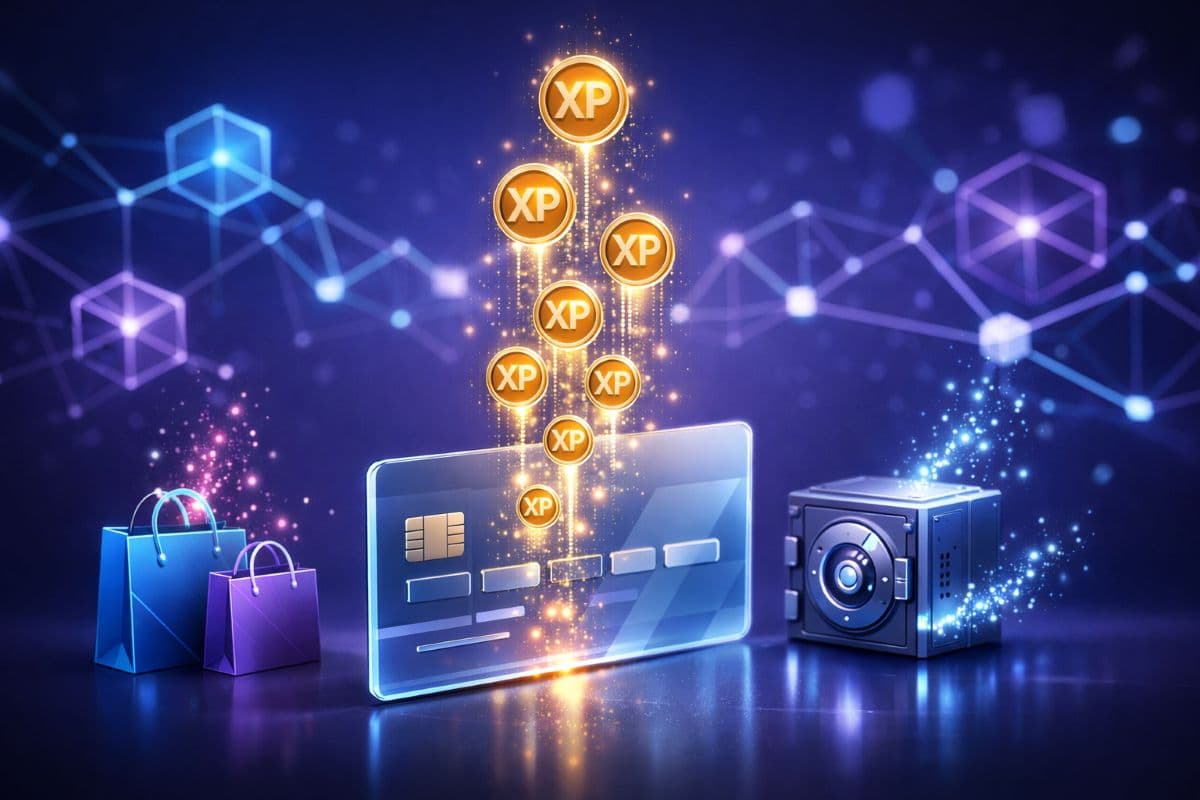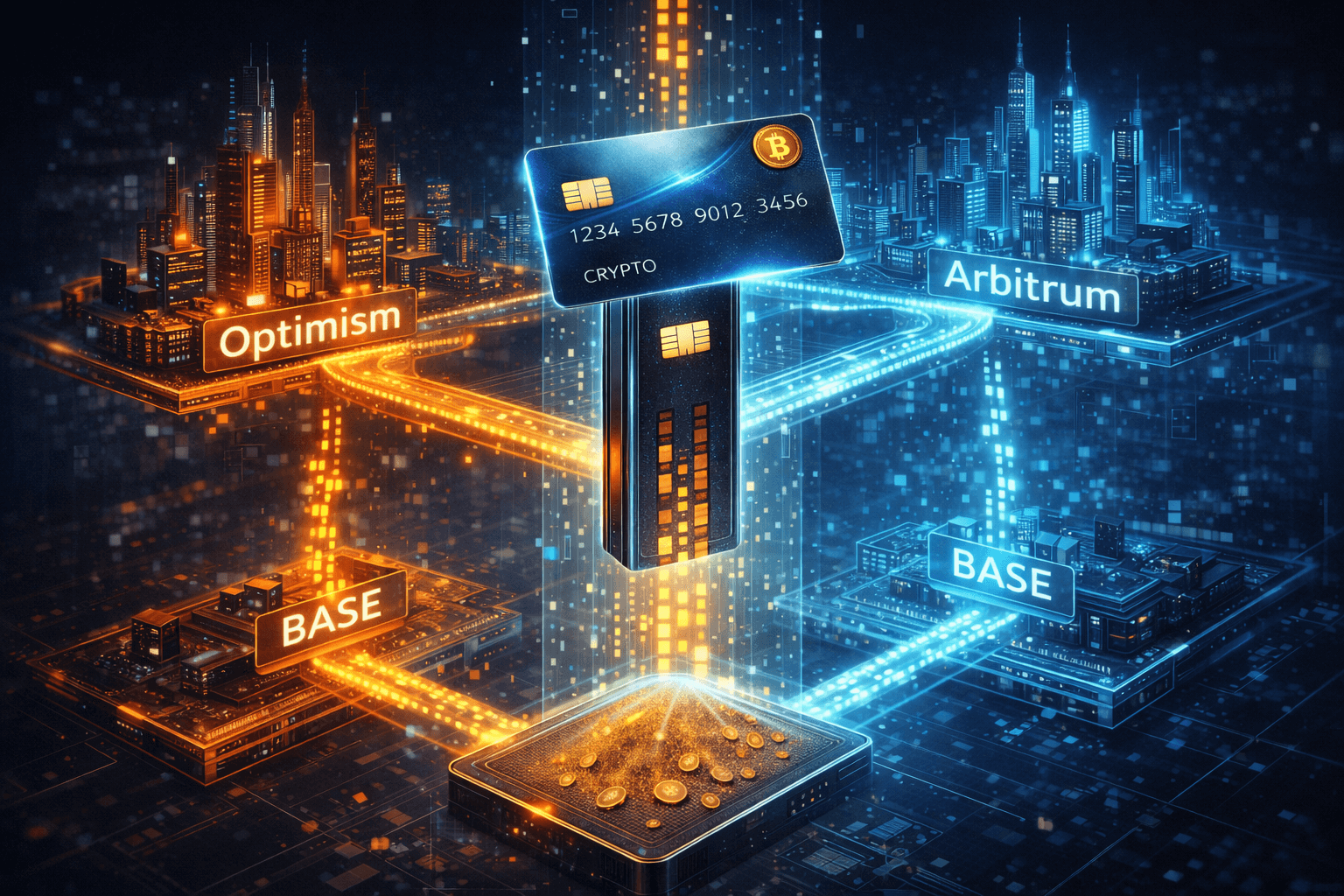
The "Airdrop Meta" has shifted. It is no longer enough to simply swap tokens on a Decentralized Exchange (DEX). In 2026, Layer 2 (L2) networks like Base, Optimism, and Arbitrum are looking for "Active Citizens"—users who integrate the network into their daily lives. The most effective way to prove this citizenship is by using an L2-Native Crypto Card.
Why This Topic Matters Now
Networks are increasingly using "Sybil-Resistant" filters for their token distributions. A crypto card—which requires a physical ID and a real-world person—is the ultimate proof of a non-bot user. By routing your daily coffee or grocery spend through an L2 card, you are generating a stream of on-chain transactions that signify a "Human User," potentially unlocking 5-10x larger airdrop allocations.
Core Explanation (Direct Answer Format)
Ecosystem synergy occurs when a user's card spending on a specific Layer 2 network contributes to their "Network Score" (e.g., Gitcoin Passport, Degenscore, or Optimism Attestations). This score is then used by dApps and the network itself to distribute rewards.
The "Proof of Activity" Stream
When you spend using a card like Gnosis Pay (on Gnosis Chain) or Ether.fi Cash (on Scroll/L2), every transaction is an "on-chain event." Unlike a centralized card (like Coinbase) where your spending is invisible to the blockchain, L2-native cards settle on-chain, creating a verifiable history of "real-world utility" for that network.
Attestations and Badges
Many L2s now use Attestations (via the Ethereum Attestation Service - EAS). A card issuer can "attest" that you have spent over $1,000 in a month without revealing what you bought. This attestation becomes a permanent "badge" on your wallet, which other protocols use to whitelist you for "Alpha" opportunities.
Market Benchmarking & ROI Math
Does using an L2 card "pay off" compared to a standard card?
| Feature | Standard Card (CEX-linked) | L2-Native Card (On-chain) |
|---|---|---|
| On-chain Trace | None (Private Database) | Verifiable (On-chain) |
| Airdrop Weight | 0% | 15% - 40% (Network Multiplier) |
| Transaction Fee | Included in Spread | Network Gas + Spread |
| User Control | Custodial | Self-Custodial |
The "Synergy ROI" Math: If you spend $10,000/year, a standard card might give you 2% cashback ($200). An L2 card might give you 1% cashback ($100) but qualifies you for an L2 Network Airdrop worth $2,000. The "Real ROI" of the L2 card is 21%, compared to the 2% of the standard card.
Real-World Implications & Regulatory Context
The transparency of L2 cards is a double-edged sword. While it helps with airdrops, it also means your spending frequency is visible on a public ledger. Under MiCA in Europe and the Bank Secrecy Act in the US, card issuers must still perform KYC. The "Synergy" model is currently leading to a regulatory debate about "Financial Privacy on Public Ledgers," with issuers moving toward Privacy-Preserving L2s (like Aztec or Manta) to protect user data while still providing airdrop alpha.
Common Mistakes or Myths
A common myth is that "Any transaction counts." Projects are increasingly filtering out "Dust Transactions" (sending $0.01 to yourself). They want to see Merchant Interaction. Using your card at a physical POS terminal is much higher "Signal" than an on-chain swap. Another mistake is assuming that "Mainnet" is the best place to be. In 2026, the activity has moved to L2s and L3s; that is where the incentives are being distributed.
How This Relates to Crypto Cards
On SpendNode, we have a "Network" filter. You can search for cards that settle on Base, Solana, or Gnosis Chain. We advise users who are active in a specific ecosystem (e.g., the Superchain) to use a card that settles on that network to maximize their ecosystem synergy.
FAQ (Blog-Level)
Does using the Coinbase Card help with the Base airdrop?
While Coinbase is a major contributor to Base, the Coinbase Card is a centralized product. For maximum "Alpha," you are better off using a card that interacts directly with the Base smart contracts, like Gnosis Pay or the upcoming native L2 cards.
Is gas expensive for L2 cards?
On modern L2s (post-EIP-4844), gas fees are fractions of a cent. Most L2 card issuers "abstract" this away—they pay the gas for you and build it into the conversion spread, so you don't need to keep a separate ETH balance for fees.
Can I boost my Gitcoin Passport with a crypto card?
Yes. Several "Stamps" in the Gitcoin Passport and other reputation systems are beginning to include "Card Ownership" or "Verified Spending" as a high-signal proof of humanity.
Overview
The era of the "Isolated Card" is ending. In the future, your crypto card will not just be a tool for buying coffee—it will be your "Financial Passport" in the Web3 ecosystem.
By choosing a card that has high synergy with the networks you use, you can turn your daily survival expenses into a strategic investment in the next generation of token distributions.