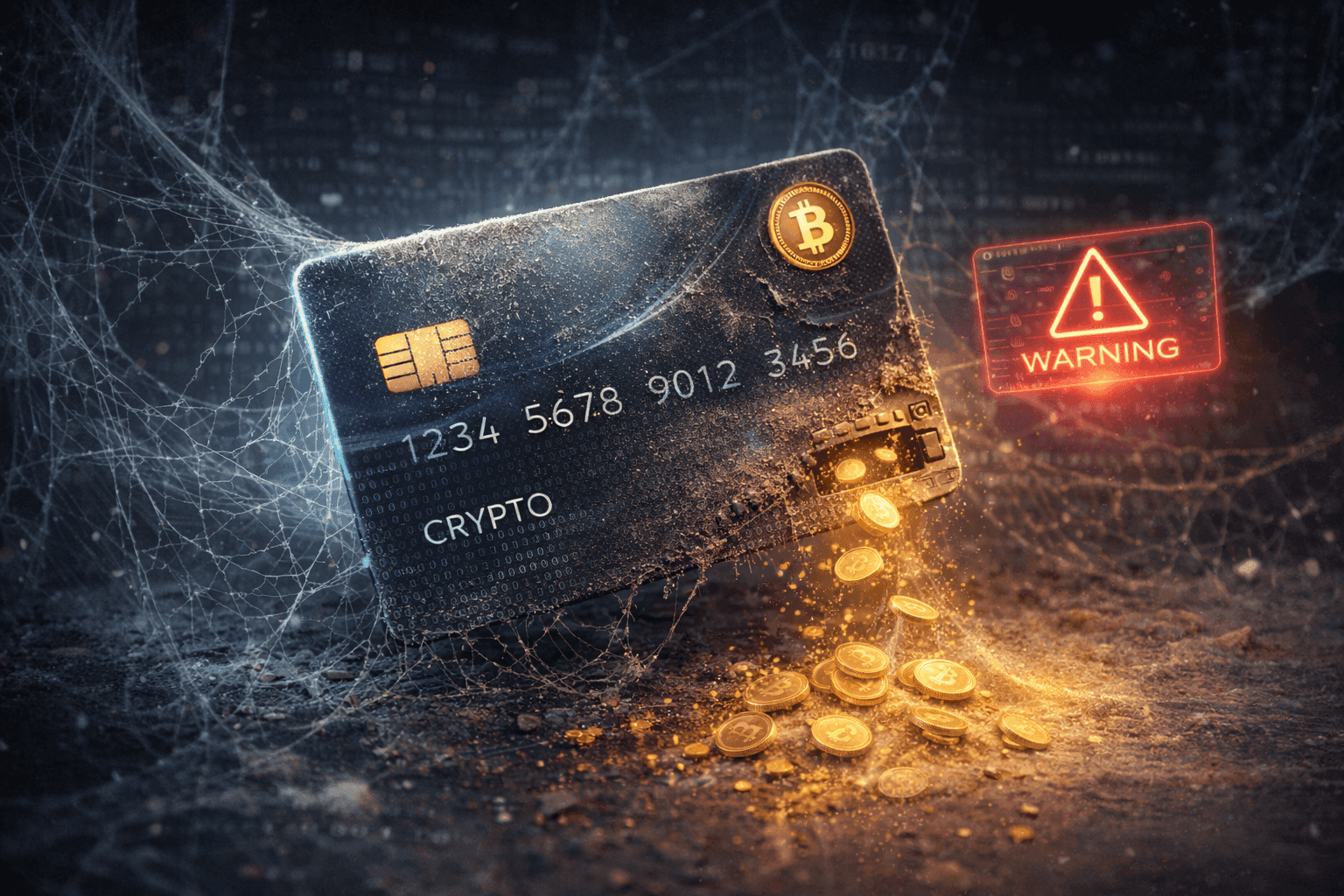
In the excitement of signing up for a new crypto card, most users focus on the "Cashback" and the "Metal Finish." Rarely do they scroll to the bottom of the terms and conditions to find the Inactivity Fee. In 2026, as the "Ghost Account" problem grows, crypto card issuers are increasingly charging users for the privilege of not using their cards.
Why This Topic Matters Now
With hundreds of cards on the market, many users "collect" cards like trading cards, often leaving small balances in multiple wallets. These "Forgotten Balances" are the primary targets for inactivity fees. Over a 12-month period, these fees can quietly wipe out a $50 - $100 balance, turning a "free" off-ramp into an expensive mistake.
Core Explanation (Direct Answer Format)
An inactivity fee is a monthly or annual charge (usually $5 - $10) applied to accounts that have had no "Customer Initiated Transactions" for a set period, typically 12 months.
What Counts as "Active"?
Generally, "Activity" includes a merchant purchase, an ATM withdrawal, or a crypto-to-fiat conversion. Simply "logging in" to the app is often not enough to reset the inactivity clock. Some issuers like Crypto.com and Nexo have specific windows (e.g., 12 months) before the fee kicks in.
Minimum Balance Requirements
Some premium cards require you to maintain a minimum "Fiat" or "Stablecoin" balance to avoid a monthly maintenance fee. If your balance drops below this threshold (e.g., $500), the issuer may charge you $5/month. This is a common tactic used by "Neobanks" that have added crypto features.
Market Benchmarking & ROI Math
How much does "Laziness" cost? Let's look at the standard fee landscape.
| Issuer Type | Inactivity Period | Monthly Fee (After Period) | Annual "Lazy" Cost |
|---|---|---|---|
| Major CEX Card | 12 Months | $5.00 | $60.00 |
| Prepaid Card | 6 Months | $2.50 | $30.00 |
| Self-Custody Card | None | $0.00 | $0.00 |
The "Dust" Math: If you have $5.00 of "Dust" (leftover crypto) in an account that charges a $5.00 inactivity fee, your balance will hit zero in exactly one month. Most issuers will not charge you into a negative balance, but they will "drain" the account to zero and then potentially close it.
Real-World Implications & Regulatory Context
Under the E-Money Directive (EMD2) in Europe and the Consumer Financial Protection Bureau (CFPB) rules in the US, issuers must disclose these fees clearly. However, "Dormant Account" laws (Escheatment) in many US states require companies to eventually hand over "abandoned" funds to the government. Issuers prefer to take the funds as "fees" rather than deal with the paperwork of state escheatment.
Common Mistakes or Myths
A common myth is that "The card is free if the monthly fee is $0." A card can have $0 monthly fee but still have a $5 inactivity fee. Another mistake is assuming that "Locked Staking" counts as activity. If you have $4,000 of CRO or NEXO staked but haven't used the card for a year, you may still be hit with an inactivity fee on your fiat wallet.
How This Relates to Crypto Cards
On SpendNode, we explicitly list "Inactivity Fees" in our Fee Breakdown section. We highly recommend Self-Custody Cards (like Gnosis Pay) for users who only intend to use their card occasionally, as these cards typically have no way to "auto-debit" a fee from your private wallet.
FAQ (Blog-Level)
How do I avoid inactivity fees?
The simplest way is to set a "Small Recurring Spend." Link your crypto card to a $1/month subscription or just buy a $1 Amazon gift card once every 11 months.
Can I get an inactivity fee refunded?
Sometimes. If you contact support immediately after the first fee is charged and show that you are now "active," many issuers will refund the fee as a gesture of goodwill to retain the customer.
Does closing the account cost money?
Watch out for the "Close Account Fee." Some issuers charge $10 - $25 to "process the return of remaining funds." If you want to stop using a card, it is often cheaper to spend the balance to zero and then let the inactivity clock run out.
Overview
Crypto cards are "Use it or Lose it" products. While they offer incredible rewards for active users, they are not designed to be passive savings accounts.
Before you "Shelve" a card to try a new competitor, ensure you have drained the balance or set a reminder to make a small purchase. In the world of 2026 crypto banking, the most expensive fee is the one you forgot you were paying.