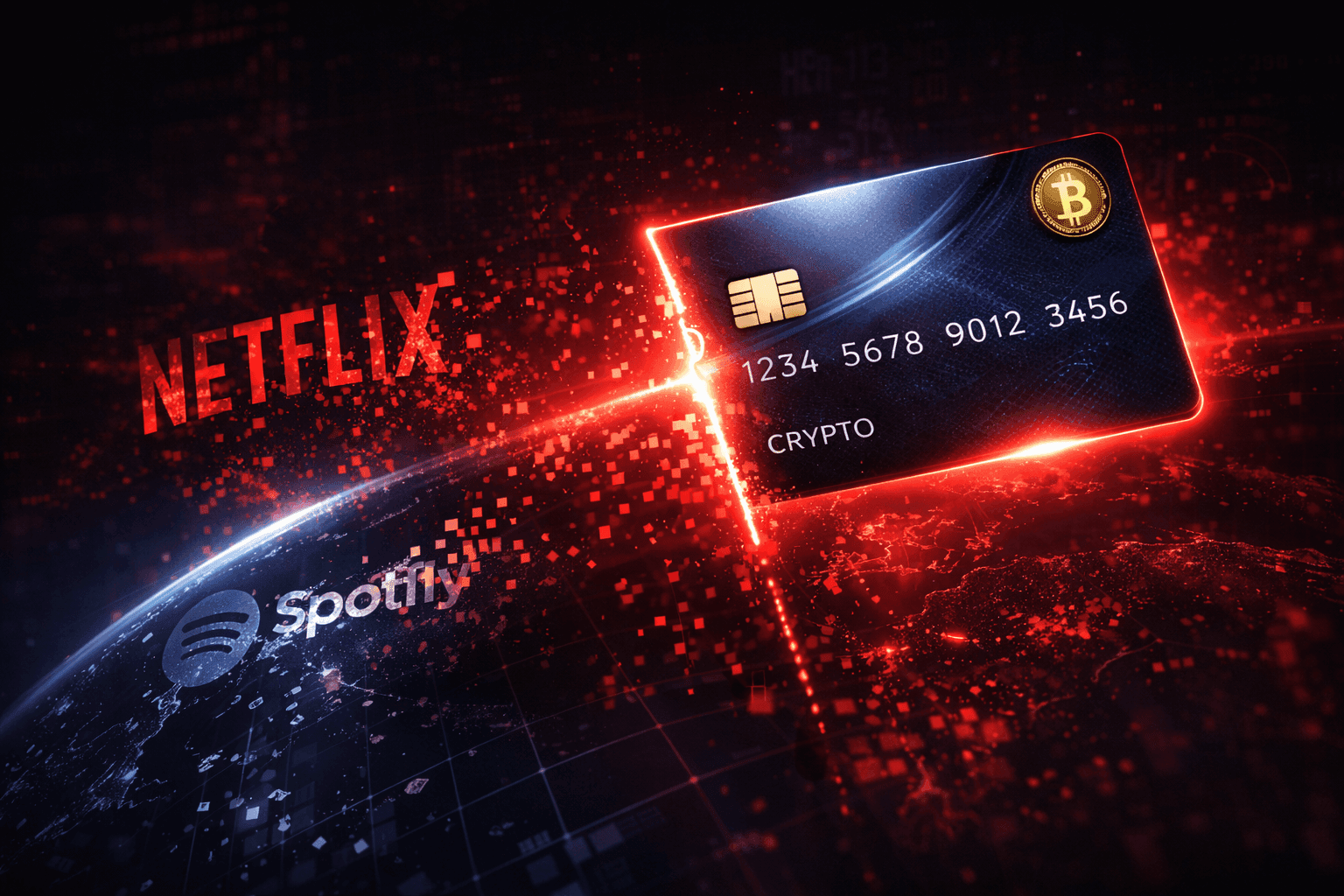
For years, the "hook" that brought millions of users into the crypto card ecosystem was the promise of free lifestyle subscriptions. Cards from Crypto.com, Binance, and Plutus practically became synonymous with "Free Spotify" and "Netflix Rebates." However, in 2026, these perks have largely vanished or been heavily restricted.
Why This Topic Matters Now
The removal of these rebates represents a fundamental shift in the crypto card industry: the move from Venture-Capital-subsidized growth to sustainable unit economics. For users, this means the "Easy Yield" era is over, and they must now evaluate cards based on their core financial utility rather than their "perks" package.
Core Explanation (Direct Answer Format)
Crypto card issuers are phasing out subscription rebates because they are "fixed-cost" liabilities that do not scale with market conditions. When token prices drop, the cost of providing a $13.99 Netflix rebate in tokens increases significantly, putting unsustainable pressure on the issuer’s treasury.
The "Customer Acquisition Cost" (CAC) Problem
In the early days, paying for a user's Spotify was a cheap way to acquire a customer. However, once millions of users joined, the monthly "burn" to maintain these rebates reached tens of millions of dollars. Issuers realized that "Perk Hunters" often sold their rewarded tokens immediately, creating constant sell-pressure.
The Shift to "Percentage-Based" Rewards
By replacing a $13.99 fixed rebate with a 2% or 3% variable cashback, issuers align their costs with their revenue (interchange fees). If a user doesn't spend, the issuer doesn't pay. This is a much more stable model for a long-term financial institution.
Market Benchmarking & ROI Math
How much "Value" was actually lost when these perks disappeared?
| Perk | Former Monthly Value | Former Annual Value | New Sustainable Equivalent |
|---|---|---|---|
| Spotify (Premium) | ~$10.99 | ~$131.88 | Requires $6,500 spend at 2% |
| Netflix (Standard) | ~$15.49 | ~$185.88 | Requires $9,200 spend at 2% |
| Amazon Prime | ~$14.99 | ~$179.88 | Requires $8,900 spend at 2% |
The "Opportunity Cost" Math: To get the same $497/year in value that you used to get from "Free Perks," you now need to spend nearly $25,000 annually on a card with 2% cashback. This highlights why the removal of these rebates felt like such a massive "nerf" to the average retail user.
Real-World Implications & Regulatory Context
The removal of perks often coincides with "Terms of Service" (ToS) updates. In jurisdictions like the UK (FCA) and EU (ESMA), financial providers are under increasing pressure to ensure their marketing isn't "misleading." Promising "Free Spotify Forever" is a high-risk claim if the provider knows they will likely cut the perk in 6 months. This has led to the rise of "Seasonal Perks" or "Merchant Boosts" that are explicitly labeled as temporary.
Common Mistakes or Myths
A common myth is that "The company is going bankrupt" just because they cut perks. In many cases, it’s the opposite: the company is maturing and trying to reach profitability. Another mistake is staying "loyal" to a card for a perk that has been capped. Many cards now limit rebates to "the first 6 months" only. Users should treat these as "Introductory Offers," much like TradFi credit cards.
How This Relates to Crypto Cards
On SpendNode, we no longer rank cards primarily by their "Perk List." Instead, our algorithm prioritizes Interchange-Linked Cashback and Staking APR. We believe a card with a sustainable 1% cashback is better than a card with "Free Netflix" that could disappear (or cause a token crash) next month.
FAQ (Blog-Level)
Which crypto cards still offer free Spotify?
As of early 2026, very few. Plutus still offers a "Perk" system where users can choose a subscription rebate, but it now requires a monthly subscription fee, which partially offsets the value.
Why did Crypto.com cut their Netflix rebate?
To ensure the long-term sustainability of the CRO ecosystem. By reducing the "emissions" of tokens used for rebates, they aim to make the token scarcer and more valuable over time.
Are there any alternatives to subscription rebates?
Yes. Many cards have moved to "Merchant Boosts" (e.g., 5-10% back at Starbucks for a limited time) or "Points Stores" where you can trade your accumulated cashback for gift cards or subscriptions.
Overview
The "Death of the Rebate" is the "Coming of Age" for the crypto card industry. While it is painful for the end-user, it signals a shift toward cards that function as real banks rather than marketing experiments.
When choosing a card today, ignore the "Free" bells and whistles. Look at the Spread, the FX Fees, and the Network Reliability. In the long run, those are the features that will save you more than a Spotify subscription ever could.