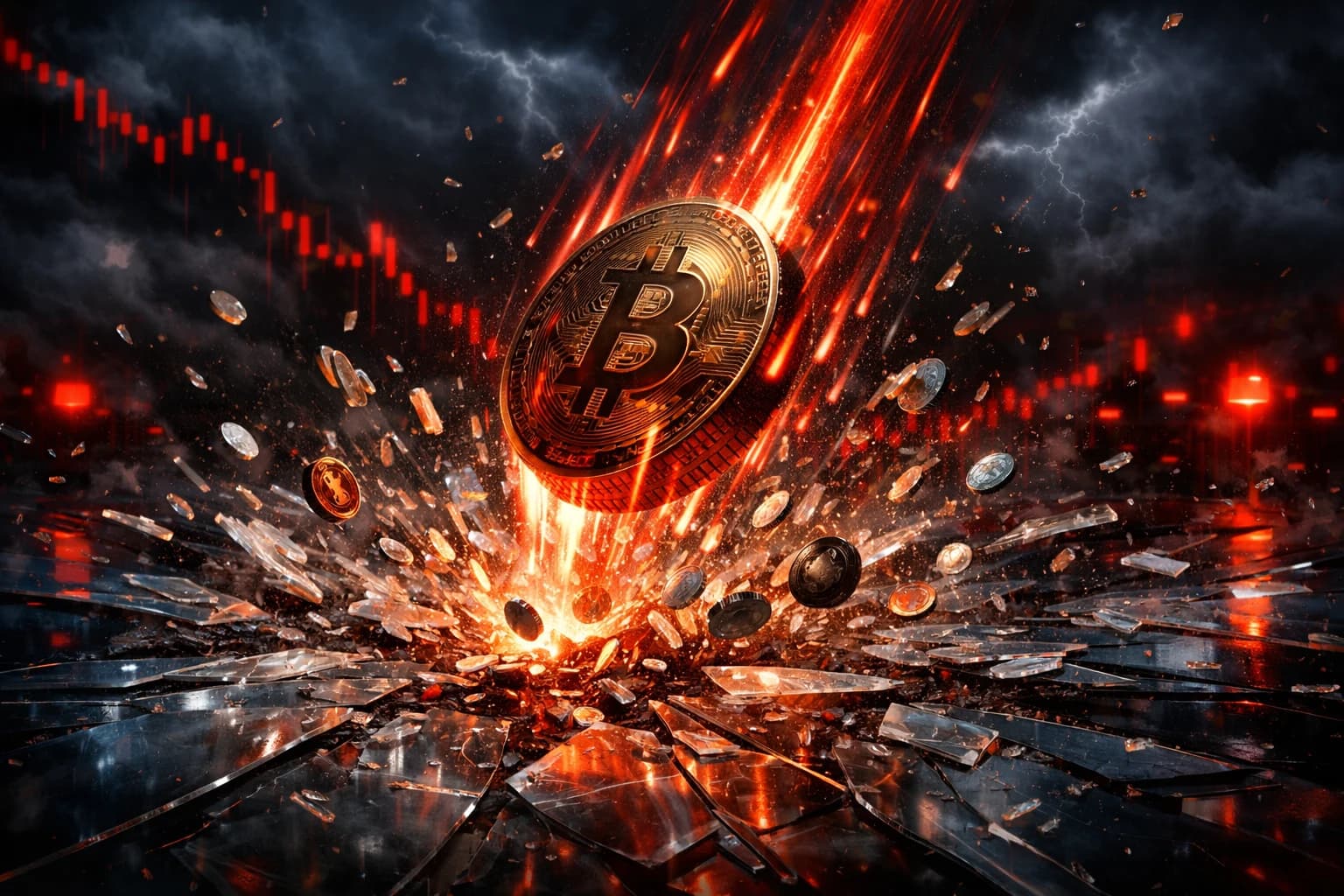
The cryptocurrency market suffered a brutal sell-off on February 1, 2026—quickly dubbed "Black Sunday II"—erasing hundreds of billions in value and triggering the largest liquidation cascade since October 2025.
Bitcoin briefly fell below $80,000, Ethereum led $2.2 billion in liquidations, and total crypto market capitalization dropped to approximately $2.66 trillion—a ~6% single-day decline.
For crypto card holders, this isn't just a number on a chart. It's a stress test of whether your card's value propositions—staking rewards, cashback, yield—survive market chaos.
The Numbers
Market-wide carnage:
- Total market cap: $2.66T (down from ~$2.83T)
- Bitcoin: Below $80K (lows near $76K-$78K)
- Ethereum: Down ~10% in 24 hours
- Solana: -9.24% to ~$104
- BNB: -7.15%
Liquidation bloodbath:
- $2.2 billion in futures liquidations in 24 hours
- Ethereum: $961 million (~44% of total)
- Bitcoin: $679 million (~31% of total)
- Largest single-day wipeout since October 2025
Bitcoin's historic bleed: Since its October peak above $126,000, Bitcoin has shed $800 billion in market value—a staggering 37% drawdown.
What Triggered Black Sunday II
1. U.S.-Iran Tensions Escalate
Geopolitical risk spiked over the weekend as U.S.-Iran tensions reached a boiling point, triggering risk-off trades across crypto, gold, and equities.
2. Kevin Warsh Fed Nomination
The dollar surged following Kevin Warsh's nomination to the Federal Reserve, signaling potential hawkish monetary policy. Crypto historically bleeds when the dollar strengthens.
3. Spot ETF Outflows Continue
Bitcoin spot ETFs have bled multi-billion dollar outflows since mid-January. According to CoinDesk's fear sentiment tracker, fear hit a 2026 high as institutional money fled.
4. Binance $19B Conspiracy Theory
Binance is stuck in the middle of a $19 billion "10/10 nightmare" conspiracy theory, with traders blaming the exchange for prolonging Bitcoin's crash through opaque reserves management.
5. Cascading Liquidations
Once Bitcoin broke $83K support, overleveraged longs were margin-called en masse. The liquidation spiral accelerated the crash, pushing BTC below $80K.
What This Means for Crypto Card Holders
If you stake CRO, BNB, or other tokens for card tiers:
The crash exposes the hidden cost of tier-based cards. When CRO or BNB drops 10-15%, your effective cashback rate collapses.
Example: Crypto.com Jade Green ($4,000 CRO stake)
- October 2025: CRO at $0.80 → $4K stake = 5,000 CRO
- February 2026: CRO at $0.60 → Same stake now worth $3,000
- Effective loss: -25% on locked capital
If you're earning 3% cashback but your staked CRO drops 25%, your real return is -22%. This is the "staking trap" we've warned about.
If you use self-custody cards (Gnosis Pay, Tria):
Congratulations—you dodged the staking bullet. Self-custody cards don't require token lock-ups, so market volatility doesn't erode your card's tier status.
Gnosis Pay:
- No CRO/BNB exposure
- Spend directly from on-chain balance (USDC, DAI)
- Volatility = you decide when to convert
Tria Signature:
- Multi-chain support (diversify across Ethereum, Polygon, Base)
- No staking requirements
- Market crash = buying opportunity (if you're holding stables)
If you hold stablecoin-heavy cards:
You're insulated from price chaos, but purchasing power risk remains. If you're spending USDC during a crash, you're effectively buying the dip with your card.
Smart move: Load up on stablecoins during rallies, spend during crashes.
Why Bitcoin's Crash Still Controls Everything
One painful truth emerged from this weekend: The crypto market still dances to Bitcoin's tune.
When BTC crashed:
- Altcoins followed (Ethereum -10%, Solana -9%)
- DeFi protocols bled (Aave, Uniswap governance tokens down 8-12%)
- Even "uncorrelated" assets like SOL and AVAX tanked
For card holders, this means:
- Your non-BTC card rewards (CRO, BNB, NEXO) will track Bitcoin's volatility
- DeFi card integrations (Aave yield cards, etc.) face liquidation risk during crashes
- Stablecoin cards remain the only true volatility hedge
Is This the Start of Crypto Winter 2026?
According to CCN's analysis, the combination of U.S.-EU tariff wars, Fed hawkishness, and Bitcoin's technical breakdown suggests we may be entering a prolonged bear market.
Bear case indicators:
- Bitcoin broke key $83K support (next support: $74K)
- Death cross forming on weekly chart
- Spot ETF outflows accelerating (institutional capitulation)
- Macro headwinds (geopolitics, rate hikes) persist
Bull case counterarguments:
- Bitcoin still up 60%+ from 2024 lows
- Hash rate remains strong (miner capitulation hasn't started)
- Institutional custody continues growing (Coinbase, Fidelity)
- Halving effects from 2024 still playing out
What to Do If You Hold a Crypto Card
1. Reassess staking tier math
If your card requires CRO, BNB, or NEXO staking, calculate your real APY after token depreciation.
Formula: (Cashback % + Staking Yield %) - (Token Price Drop %) = Real Return
If real return is negative, consider downgrading tiers or switching to non-staking cards.
2. Move to stablecoins for spending
During crashes, spending volatile tokens = selling the bottom. Load card with USDC/USDT and wait for recovery before converting crypto.
3. Consider self-custody cards
Gnosis Pay and Tria don't lock you into depreciating tokens. You maintain full custody and can react to market conditions in real-time.
4. Don't panic-sell card balances
If you're holding a Coinbase Card or Crypto.com Card, don't liquidate during panic. Historical data shows crypto recovers 80%+ of crashes within 3-6 months.
5. Take advantage of crash discounts
If your card offers cashback in crypto (e.g., 4% back in Bitcoin), now is the best time to spend. You're stacking sats at a discount.
Bottom Line
Black Sunday II is a reminder that crypto remains a high-volatility asset class, and any card that ties your tier status or rewards to token prices exposes you to double risk: market crash + reward depreciation.
The safest crypto card strategy in 2026:
- Use stablecoin-denominated cards (Gnosis Pay, Coinbase USDC card)
- Avoid long-term token staking for tier access
- Treat volatile token cashback as "lottery tickets" (nice if they moon, but don't rely on them)
The crash won't stop innovation—but it will separate cards that work in all market conditions from those that only shine during bull runs.
Sources: