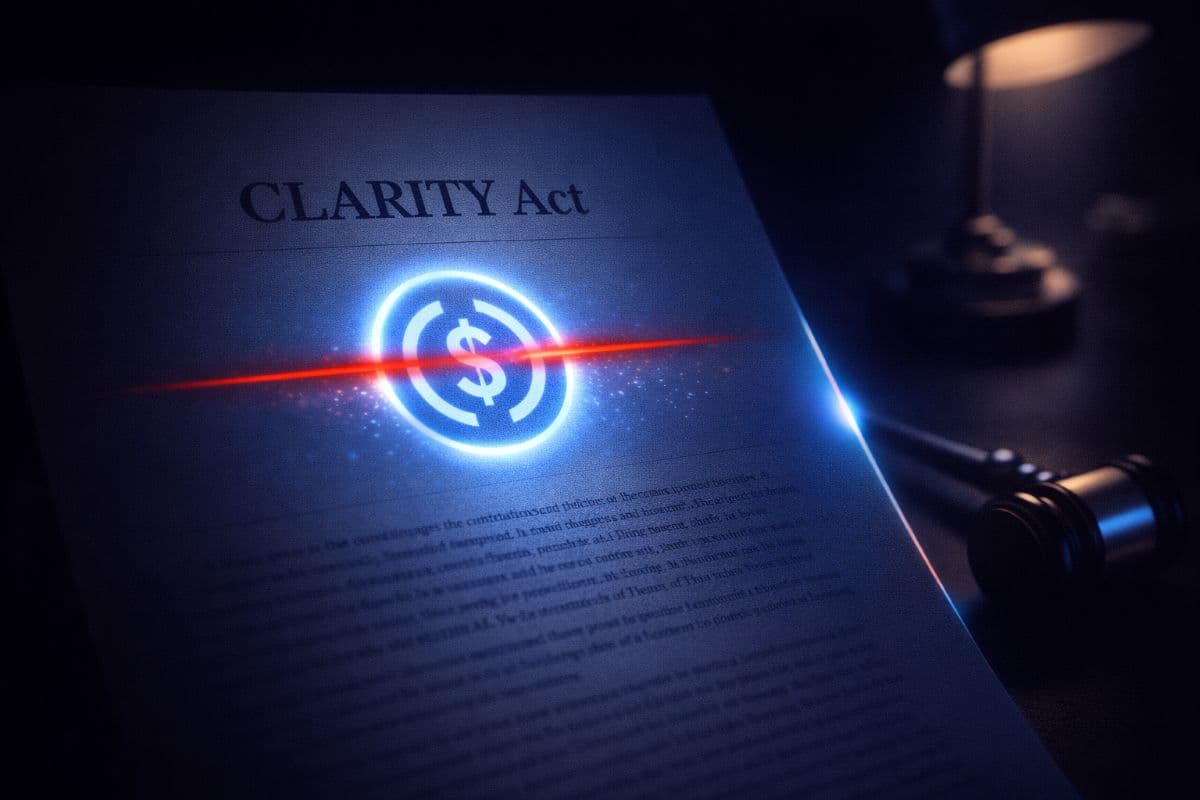
The legislative battle for the future of US dollar-backed digital assets has reached a breaking point. In January 2026, Coinbase officially withdrew its support for the Digital Asset Market Clarity Act (CLARITY Act), a bill it had once championed as the path to regulatory certainty.
The reason for the sudden U-turn? A proposed amendment that Coinbase CEO Brian Armstrong warns would "kill rewards on stablecoins," allowing traditional banks to legislatively ban their primary digital competition.
Why the CLARITY Act Threatens Stablecoin Rewards
For the average crypto cardholder, stablecoins like USDC are the "Oil" that keeps the engine running. They provide a low-volatility way to store value and earn yield or cashback while waiting to spend. If the CLARITY Act passes in its current form, the 1% to 4% rewards many users expect on their stablecoin balances could become illegal overnight in the United States.
Furthermore, stablecoins are now a pillar of the crypto economy's profitability. In Q3 2025, stablecoin-related revenue accounted for 56% of Coinbase's net income. A ban on rewards isn't just a regulatory detail; it’s an existential threat to the current business model of US-based crypto cards.
How the CLARITY Act Could Ban Stablecoin Yield
The CLARITY Act is a proposed US federal framework for digital assets that, in its latest Senate draft, includes provisions that would prohibit crypto service providers from offering yield or rewards solely for holding stablecoins.
While the bill aims to provide a clear legal structure for "payment stablecoins," the banking lobby has successfully introduced language that classifies stablecoin rewards as a form of unregulated banking activity. Under these rules, exchanges could only offer rewards tied to active "work" (like staking or liquidity provision), effectively banning the passive "Earn" and "Card Reward" programs that users rely on today.
Market Benchmarking and ROI Math
To understand the stakes, we must look at the "Revenue Gap" this legislation creates for both the issuer and the user.
The Cardholder Perspective: If you hold $10,000 in USDC to fund your monthly card spending:
- Current State: Many platforms offer ~4% APR on USDC balances. Annual Gain: $400.
- CLARITY Act State: 0% rewards allowed on idle balances. Annual Gain: $0.
For a user with a $500 monthly spend, losing that 4% yield is equivalent to adding a 6.6% "invisible fee" to every purchase they make with the card compared to the current environment.
The Issuer Perspective: Coinbase earned $243 million from stablecoins in a single quarter last year. If they are forced to stop sharing this revenue with users via rewards, they lose their primary incentive for users to keep liquidity on their platform, potentially triggering a massive flight of capital to offshore or non-custodial alternatives.
Common Mistakes or Myths
Myth: "This only affects interest accounts, not card cashback." The current draft is broad. If the "cashback" is funded by the yield generated from the underlying stablecoin reserves (which most are), it falls under the same regulatory umbrella.
Mistake: Assuming this is about "Security." Brian Armstrong argues this is a "Protectionist" move by the banking lobby. By banning stablecoin rewards, banks ensure that users keep their cash in traditional savings accounts which often offer lower rates than digital alternatives.
Myth: "The bill is guaranteed to pass." Actually, the pushback from Coinbase and other industry leaders has caused the Senate markup to be postponed. The "U-Turn" by major industry players has significantly lowered the immediate probability of the bill passing in its current "anti-reward" form.
How This Relates to Crypto Cards
The Coinbase Card is the most visible target of this legislation. Because it is a US-regulated product, it must comply with federal law more strictly than offshore competitors.
If you are concerned about the future of stablecoin rewards, this is a strong argument for exploring Self-Custodial Card Models like Gnosis Pay or Tria Signature. Because these cards spend directly from a smart contract wallet, the rewards are often generated via decentralized protocols (DeFi) rather than a centralized issuer's "Earn" program, making them harder to target with a single piece of national legislation.
FAQ
Will my current USDC rewards stop today? No. The CLARITY Act is still a bill in the proposal stage. Current reward programs remain active until a law is signed and an implementation date is set.
Does this affect Bitcoin or Ethereum rewards? The current controversy is specific to "Payment Stablecoins." Rewards earned through Proof-of-Stake (like ETH staking) are generally treated differently under the current draft.
What happens if the bill passes? Issuers would likely pivot to "Subscription" models or "Fee Credit" models to bypass the ban on direct yield, but the "Free Cash" era of stablecoin rewards would effectively end in the US.
Overview
The clash between Coinbase and the US Senate over the CLARITY Act is the most important policy story for cardholders in 2026. At stake is the ability to earn a return on the capital you use for daily spending. If the banking lobby succeeds in killing stablecoin rewards, the ROI of centralized crypto cards will plummet, likely driving a massive shift toward DeFi-linked payment solutions.
Actionable takeaway: Monitor the "CLARITY Act Section 404" updates. If the bill moves forward with the reward ban intact, consider diversifying your spending liquidity into self-custodial wallets that utilize decentralized yield protocols.
Recommended Reading
- Coinbase Card: Full 2026 Review
- What is Self-Custody Spending?
- Stablecoin Cards vs. Multi-Asset Cards