

Best Crypto Cards in Australia (2026)
Australia is a practical crypto card market because high card acceptance, cross-border spend, and the 12-month CGT discount all matter at once. This guide compares the cards that hold up after FX, fees, and tax timing.
Verified for Australia
38 crypto cards available
Local currency: AUD
CommBank, Westpac, ANZ, and NAB debit cards earn zero crypto cashback and charge 2-3% on every non-AUD purchase. Australia's crypto cards offer up to 8% cashback, zero FX fees, and a critical tax advantage.
The 50% CGT discount on crypto held over 12 months effectively halves your tax on card spending.
The Independent Reserve Cryptocurrency Index (2026) puts Australian crypto ownership at 33% of adults - roughly 6.5 million holders - placing Australia in the top 5 globally for per-capita adoption. The ATO (Australian Taxation Office) matches this with aggressive enforcement, running data-matching programs with every major exchange since 2019.
Between 2019 and 2024, the ATO sent over 300,000 compliance letters to crypto holders. Every card transaction creates a CGT event, so strategic spending is essential.
The AUD has weakened from approximately 0.75 USD to approximately 0.63-0.65 USD over recent years, making 0% FX cards even more valuable for Australians purchasing USD-denominated goods and services online.
| Card | Max Rewards | Annual Fee | FX Fee | Type | Best For |
|---|---|---|---|---|---|
| Bitget | 8% BGB | $0 | 0% + 0.9% tx | Debit | Best all-around (zero FX, high cashback) |
| COCA | Up to 8% | $0 | 0% | Debit | $COCA tiers (1% free) + 6% APY |
| Tria | Up to 6% | $20-$250 | 0% | Debit | Yield-linked rewards, zero FX |
| Kolo | 2% BTC | $0 | 0% | Prepaid | Free BTC cashback card |
| Crypto.com Icy | 4% | CRO stake | 0% | Prepaid | Metal + airport lounge perks at SYD/MEL/BNE |
| Wirex | 0.5% | Free | 0% | Debit | Multi-currency, 0% FX (Elite 8% at $360/yr) |
| KAST | 2% points | $0 | 0.5% | Prepaid | Free prepaid for stablecoin-funded everyday spend |
Bitget offers the best overall value: 8% cashback, zero annual fee, zero FX fee. The 0.9% transaction fee still nets approximately 7.1%. For the 12-month CGT discount strategy, any high-cashback card works since the tax benefit comes from your holding period, not the card itself.
COCA adds 6% APY on idle stablecoins, effectively earning yield while you wait for the 12-month threshold. Crypto.com Icy adds 4% cashback with Priority Pass airport lounge access at SYD, MEL, and BNE (requires CRO stake).
Best Card For Every Need in Australia
Top 7 Crypto Cards in Australia
Australia's 50% CGT discount on crypto held over 12 months effectively halves your tax rate from up to 47% down to 23.5%. With both APAC and GLOBAL card access and zero geo-bans, Australia has the broadest card selection among APAC countries.
Bitget (8%) leads on cashback with 0% FX and no staking requirements. COCA (up to 8% scaling with staking $COCA tokens, 1% at free Starter, + 6% APY) lets users earn yield on stablecoins while building a 12-month holding stack before spending. Tria Signature and Kolo add 0% FX alternatives outside the major exchange-card stack. Crypto.com adds Priority Pass lounge access at SYD, MEL, and BNE for Australia's frequent-traveler demographic.
ether.fi enables borrow-to-spend for holders whose crypto has not yet hit the 12-month threshold, bridging the gap without triggering a CGT event. KAST earns a place as the free prepaid card for Australians who want supermarket, subscription, and travel spend live without paying into staking, lounge perks, or exchange-tier reward ladders.
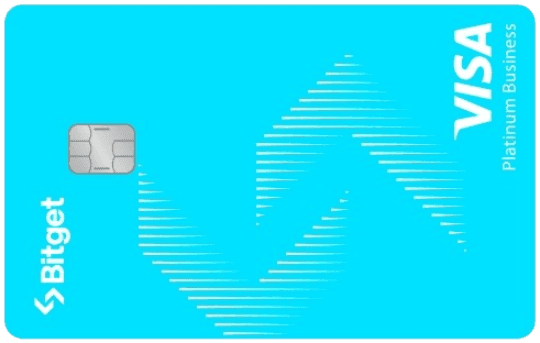
1. Bitget Card
Trade and Spend: Up to 8% BGB Cashback for Bitget Traders
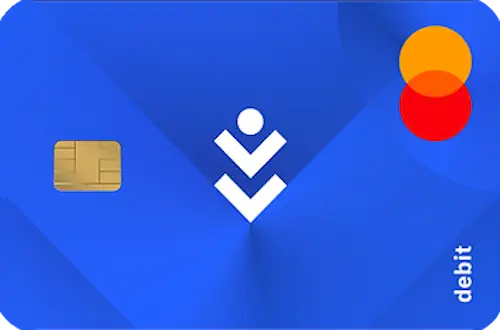
2. COCA Visa Card
Self-Banking: 8% Cashback + 6% APY + 0% FX

3. Tria Signature Card
High-Yield Mastery: 15% APY + Visa Signature Perks
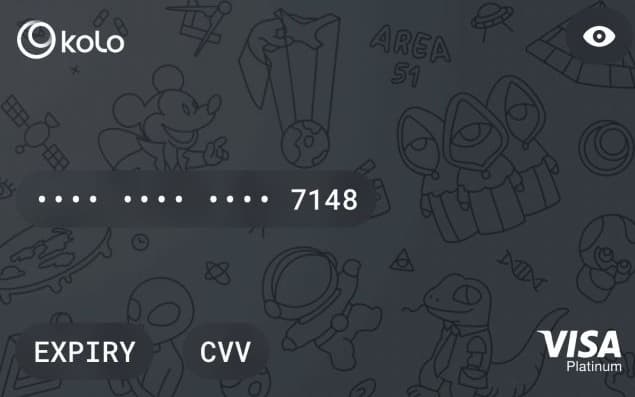
4. Kolo Card
Earn Bitcoin on Purchases: 2% BTC Cashback + Visa Platinum + 170+ Countries
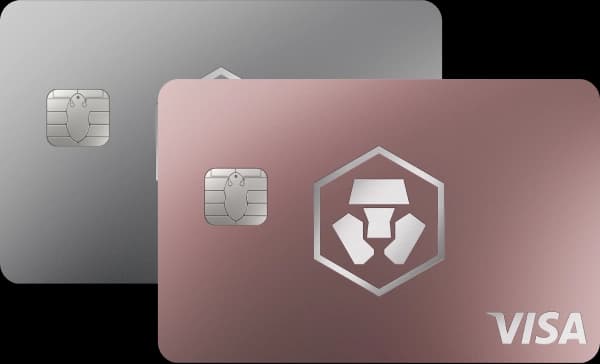
5. Private (Icy White / Rose Gold)
Elite Private Status: 4% Uncapped Cashback + Guests

6. ether.fi Core Card
Zero Barriers: 3% Back on Every Purchase, No Stake Required
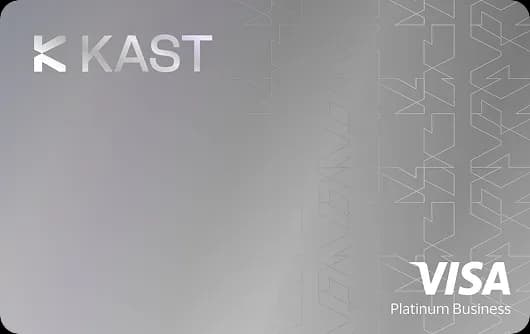
7. KAST K Card
Early Adopter Access: 2% Points + 4% $MOVE on Every Swipe
Crypto Card Regulation in Australia
ASIC (Australian Securities and Investments Commission) and AUSTRAC (Australian Transaction Reports and Analysis Centre) jointly regulate crypto in Australia. AUSTRAC requires all digital currency exchanges (DCEs) to register under the AML/CTF Act 2006 and comply with Know Your Customer, transaction monitoring, and suspicious matter reporting requirements.
On April 1, 2026, the Corporations Amendment (Digital Assets Framework) Act 2025 passed both houses of Parliament, making it Australia's first dedicated crypto licensing law. The act creates two regulated categories - Digital Asset Platforms (DAPs) and Tokenised Custody Platforms (TCPs) - and requires any entity that holds customer crypto to obtain an Australian Financial Services Licence (AFSL) from ASIC.
Existing operators have six months from royal assent to apply or cease operations.
A low-value exemption applies to platforms holding under AU$5,000 per customer and facilitating under AU$10 million annually. Non-custodial services and self-custody wallets are excluded from the licensing requirement. The government estimates the regulated digital asset market at A$24 billion annually.
From March 31, 2026, AUSTRAC's regulatory scope expands to cover all DASPs (Digital Asset Service Providers), requiring Travel Rule compliance for VASP-to-VASP transfers. Australia is also adopting the OECD's CARF (Crypto-Asset Reporting Framework), targeting first automatic exchanges of international crypto transaction data by 2028.
A persistent issue for Australian crypto users is de-banking - major banks restricting transfers to crypto exchanges. As of 2026, 30% of crypto investors report blocked or delayed transfers (see spending tips section below for the full breakdown and workarounds).
Crypto.com serves Australians through its APAC entity with long-standing operations. Bitget operates through its APAC entity. Binance restricted Australian services in mid-2023 following ASIC scrutiny of its derivatives offerings, and its card product (Brazil-only) was never available here. CoinSpot, Australia's largest domestic exchange (AUSTRAC-registered since 2014), does not offer a card product.
Australia's consumer protection framework also applies to crypto cards. ASIC's product intervention power (under Part 7.9A of the Corporations Act) can restrict or ban financial products deemed harmful to retail investors. ASIC used this power to restrict crypto derivative products in 2021 and has signaled similar oversight may extend to card-linked crypto products. The Australian Financial Complaints Authority (AFCA) handles disputes, but coverage varies by issuer.
Verify AUSTRAC registration at austrac.gov.au before committing funds to any platform.
Tax Treatment of Card Rewards in Australia
The ATO treats crypto as a CGT asset under the Income Tax Assessment Act 1997. Every card swipe spending crypto is a CGT event (CGT event A1: disposal of an asset). The gain is the difference between your cost basis and the AUD value at the time of spending.
The 50% CGT discount is Australia's key advantage: individuals holding crypto for over 12 months receive a 50% reduction on the capital gain before it hits their marginal income tax rate. This single rule shapes the entire spending strategy.
Example: You bought 0.01 BTC at AUD 500 and spend it 14 months later when it is worth AUD 1,500. The AUD 1,000 gain gets the 50% discount, so only AUD 500 is taxable. At a 30% marginal rate (the most common bracket for crypto-active professionals), you pay AUD 150 in tax.
The same transaction within 12 months costs AUD 300, double the tax for the exact same purchase.
| Taxable Income Bracket | Marginal Rate | Effective CGT (under 12 months) | Effective CGT (12+ months, 50% discount) |
|---|---|---|---|
| AUD 0 - 18,200 | 0% | 0% | 0% |
| AUD 18,201 - 45,000 | 16% | 16% + 2% ML = 18% | 9% |
| AUD 45,001 - 135,000 | 30% | 30% + 2% ML = 32% | 16% |
| AUD 135,001 - 190,000 | 37% | 37% + 2% ML = 39% | 19.5% |
| AUD 190,001+ | 45% | 45% + 2% ML = 47% | 23.5% |
The 2% Medicare Levy (ML) applies on top of all brackets. Some taxpayers also face the Medicare Levy Surcharge (1-1.5%) if they lack private health insurance.
Personal-use asset exemption: The ATO allows a potential CGT exemption for crypto acquired and used as a personal-use asset (not held as an investment) with a cost basis under AUD 10,000.
However, the ATO's position is that crypto held on an exchange is generally NOT a personal-use asset because the primary purpose of acquisition was investment, not immediate personal use. This exemption is narrow and contested (see TD 2014/26 and the ATO's cryptocurrency guidance), so do not rely on it for card spending.
SMSFs (Self-Managed Super Funds): Some Australian SMSFs hold crypto as an investment. However, spending SMSF-held crypto through a personal card would violate superannuation regulations (sole purpose test). SMSF crypto is for retirement savings only, not card spending.
| Cashback Type | Cost Basis at Receipt | Tax When Spent (under 12 months) | Tax When Spent (12+ months) |
|---|---|---|---|
| BTC cashback | AUD 0 (100% is gain) | Up to 47% on full value | Up to 23.5% (50% discount) |
| USDC cashback | AUD 0 (near-zero gain) | approx. 0% | approx. 0% |
| Points/perks | Not taxed (rebate) | N/A | N/A |
Cashback rewards create a zero cost basis. This means 100% of the value is a capital gain when you eventually spend or sell the cashback tokens. Hold BTC cashback for 12+ months to halve the tax. USDC cashback sidesteps the issue entirely.
Record keeping is mandatory. The ATO requires records of every crypto acquisition and disposal (including card transactions) for at least 5 years. Tools like Koinly (Australian-founded, integrates with ATO myTax), CryptoTaxCalculator (Sydney-based, supports ATO-formatted reports), and Syla generate compliant tax reports.
The ATO's data-matching program covers Binance, CoinSpot, Coinbase, and most major exchanges, so under-reporting is high-risk.
Loss harvesting: Australia allows capital losses to offset capital gains (but not other income). If your crypto portfolio has unrealized losses, strategically selling losing positions before June 30 (end of Australian financial year) can offset gains from card spending during the same year.
Losses carry forward indefinitely until fully offset against future gains. The ATO's "wash sale" rules are less strict than the US IRS 30-day rule, but deliberately selling and immediately rebuying to crystallize a loss may still attract scrutiny.
How to Apply from Australia
Australian crypto card applications require an Australian driver's licence (issued by state/territory road authority: RMS in NSW, VicRoads in VIC, TMR in QLD, etc.) or an Australian passport.
Proof of address via utility bill (electricity from AGL, Origin, or EnergyAustralia; internet from Telstra, Optus, or TPG), bank statement, or ATO notice of assessment. Your TFN (Tax File Number) is required for exchange account registration under AML/CTF rules. Medicare card works as secondary ID.
Most Australian exchanges and issuers use the DVS (Document Verification Service), the government's real-time document checking system, enabling instant identity verification for Australian driver's licences and passports.
myGovID (the government's digital identity system) is increasingly accepted for financial services. International issuers without DVS integration may take 1-3 business days for manual document review.
For temporary visa holders (subclass 482, 485, 491, etc.), a foreign passport plus Australian proof of address works for most issuers. International students on Student Visas (subclass 500) can apply using their passport and a utility bill or bank statement showing an Australian address.
Physical cards ship domestically via Australia Post (registered/tracked) or StarTrack within 5-10 business days. Rural and remote addresses may take 10-14 days. Virtual cards are available immediately for cards with Apple Pay and Google Pay use.
Both Apple Pay and Google Pay work at most Australian merchants. Samsung Pay also works at most Australian terminals.
New Zealand residents can sometimes access Australian-targeted card offerings through shared APAC coverage. See the New Zealand country page for NZ-specific options and tax treatment differences.
Spending Tips for Australia
Why Australians Still Hesitate
Australia's payment infrastructure already works. Contactless tap is standard everywhere. Opal and myki take Visa/Mastercard directly. Apple Pay adoption exceeds 50% of iPhone users. CommBank and Westpac apps are polished. A typical Australian with a Big Four account and an ING Orange Everyday for travel already has a setup that handles most spending.
So the question is not "do crypto cards work in Australia?" - they do. The question is "why would I add one to a setup that already works?"
Three reasons land for Australian users. First, the 50% CGT discount turns aged crypto into a tax-advantaged spending source that no bank account or credit card offers. A CommBank Platinum earns frequent flyer points. A crypto card funded with 12-month-old BTC earns 5-8% cashback AND the disposal is taxed at half rate.
Second, AUD weakness (from approximately 0.75 to 0.63 USD over recent years) means every USD subscription, every Bali dinner, and every Amazon US purchase costs 16%+ more in AUD - and Big Four bank cards add 2.5-3% FX markup on top of that erosion. Third, 33% of Australians now hold crypto with no way to spend it through a bank card. A crypto card is the spending layer that CoinSpot and Swyftx cannot provide.
The Big-Bank Friction Problem
The biggest obstacle to crypto card adoption in Australia is not regulation, acceptance, or tax complexity. It is getting money from your bank account to your card.
The 2026 Independent Reserve survey found that 30% of Australian crypto investors have had their bank block or delay a transfer to a crypto exchange - up from 19.3% the year before. The problem is getting worse, not better.
CBA maintains a hard AUD 10,000 monthly cap on transfers to exchanges with a mandatory 24-hour hold on each transaction. Westpac imposes a AUD 10,000 monthly limit and blocks payments to specific exchanges including Binance. ANZ and NAB have similar restrictions with varying enforcement. These "scam prevention" measures catch legitimate crypto card users alongside actual fraud.
The workaround is straightforward: maintain a secondary account at ING Australia or Macquarie (both process exchange transfers without friction) and use PayID (NPP) for instant settlements to AUSTRAC-registered exchanges like CoinSpot, Swyftx, or Independent Reserve. The Albanese Government's four-pillar digital-asset reform plan specifically addresses de-banking, but until the framework takes effect, the dual-account strategy is the practical solution.
For users who already hold crypto from mining, trading, or prior investment, the funding pipeline bypasses banks entirely: transfer from your wallet to the card issuer. No bank involved at any step.
How Australian Spending Actually Splits
A Sydney professional's monthly spending divides into categories where crypto cards perform differently.
Domestic AUD (70-80%): Woolworths, Coles, Aldi, IGA groceries. Petrol at BP, Shell, Ampol. Opal/myki transit. Restaurant dinners. This is pure cashback territory - zero FX because the card converts at the point of sale. At AUD 2,000/month domestic and 8% cashback, that is AUD 1,920/year from spending you would do anyway.
Southeast Asia travel (10-15%): Bali, Thailand, Vietnam, and the Philippines are the most popular short-haul destinations for Australians. A 2-week Bali trip typically runs AUD 2,000-5,000 in on-the-ground spending (hotels, restaurants, transport, activities). Big Four bank cards charge 2.5-3% FX on every IDR transaction. A zero-FX crypto card saves AUD 50-150 per trip. At 2-3 trips per year, that is AUD 100-450 in avoided FX alone, before cashback.
New Zealand (5%): Short-haul neighbor with NZD exposure. Queenstown skiing, Auckland city breaks. Smaller FX savings per trip but frequent crossings.
USD subscriptions and online (5-10%): Netflix, Spotify, Adobe Creative Cloud, GitHub, AWS, ChatGPT, iCloud. Most are billed in USD. AUD 200/month in USD subscriptions costs AUD 60-72/year in Big Four FX markup. A zero-FX card eliminates this. Amazon US purchases (often cheaper than Amazon AU even after shipping) add to the USD exposure.
The 12-Month Holding Strategy (Your Most Powerful Tool)
Build a "spending stack" of crypto held for over 12 months. When you spend it through your card, only half the gain is taxable. At a 32% effective rate (30% + 2% Medicare, covering the AUD 45,001-135,000 bracket), the 50% discount drops your tax to 16%.
At the top rate (47%), it drops to 23.5%. This is equivalent to getting a 16-23.5% tax reduction on every purchase funded with long-held crypto.
How to implement: Buy crypto on CoinSpot or Swyftx (instant AUD deposits via PayID). Hold for 12 months. Transfer to your card wallet. Spend. The 50% discount applies automatically when you file your tax return.
Use Koinly or CryptoTaxCalculator to track which lots have crossed the 12-month threshold. FIFO (First In, First Out) is the most common cost basis method accepted by the ATO.
Card Selection by Use Case
- Bitget (8% BGB, 0% FX + 0.9% tx, free): Best all-around card, zero FX critical since AUD-to-USD conversion happens on every purchase
- COCA (up to 8% with staking $COCA, 1% free, + 6% APY): Best for earning yield on stablecoins while building a 12-month holding stack
- Tria (up to 6%, 0% FX): Signature at 4.5% ($109/yr) or Premium at 6% ($250/yr). Yield-linked rewards avoid volatile token CGT exposure.
- Kolo (2% BTC, 0% FX, $0): Free BTC cashback card for AUD spending
- Crypto.com Icy (4%, 0% FX, CRO stake): Metal card with airport lounge access at SYD, MEL, BNE
- KAST (2% points, 0.5% FX, free): Free prepaid for stablecoin-funded spending without exchange-tier requirements
Bitget vs COCA vs Crypto.com: Australian Spending Math
All three have 0% FX. Bitget has a 0.9% transaction fee, COCA and Crypto.com have none.
| Monthly Spend | Bitget (8%, 0.9% tx, 0% FX) | COCA (8%, 0% FX) | Crypto.com Icy (4%, 0% FX) |
|---|---|---|---|
| AUD 1,500 | AUD 1,278/yr net | AUD 1,440/yr | AUD 720/yr + lounges |
| AUD 3,000 | AUD 2,556/yr net | AUD 2,880/yr | AUD 1,440/yr + lounges |
| AUD 5,000 | AUD 4,260/yr net | AUD 4,800/yr | AUD 2,400/yr + lounges |
COCA edges out Bitget at the same 8% rate because it has no transaction fee, netting AUD 540/yr more at AUD 5,000/month. COCA requires staking $COCA tokens for the 8% tier (1% at free Starter), while Bitget requires BGB holdings.
Crypto.com Icy at 4% earns less but adds Priority Pass lounge access at SYD, MEL, BNE, and Spotify/Netflix rebates. For most Australian users, Bitget offers the best risk-adjusted return since 8% is available without complex staking mechanics.
Spending Scenario: AUD 3,000/month (32% Bracket, 12-Month BTC)
| Funding Method | Annual Spend | Cashback (8%) | Tax (32% effective) | FX Savings (vs CBA 3%) | Net Benefit |
|---|---|---|---|---|---|
| BTC held 12+ months (100% appreciated) | AUD 36,000 | AUD 2,880 | AUD 2,880 (16% after discount) | AUD 1,080 | AUD 1,080 |
| BTC held under 12 months | AUD 36,000 | AUD 2,880 | AUD 5,760 (32%) | AUD 1,080 | -AUD 1,800 (net loss) |
| USDC (stablecoin) | AUD 36,000 | AUD 2,880 | approx. AUD 0 | AUD 1,080 | AUD 3,960 |
Short-term BTC spending at the 32% bracket produces a net loss when factoring in CGT on the underlying appreciation. The 12-month strategy turns a loss into AUD 1,080 net benefit. USDC spending generates AUD 3,960 by avoiding tax entirely.
For Australians earning AUD 80,000-135,000 (the 30% bracket, covering most crypto-active professionals), USDC funding saves AUD 2,880+ per year in avoided CGT on AUD 36,000 annual card spending.
Borrow-to-Spend: Avoiding CGT Without Selling
For Australians holding appreciated crypto that has not yet reached the 12-month threshold, ether.fi (3% cashback) lets you borrow stablecoins against ETH collateral and spend without triggering a CGT event. The borrowing cost (5-8% APR) costs less than paying 32-47% CGT on short-term gains.
Nexo (lending platform; Nexo Card is EEA/UK/CH only) offers a similar facility with a broader collateral range including BTC, ETH, and select altcoins. This strategy bridges the gap until your holdings qualify for the 50% discount.
FX Savings for Australian Users
Since most crypto cards settle in USD, every domestic AUD purchase involves FX conversion. Zero-FX crypto cards save 2.5-3% per transaction compared to the Big Four, and the compare tool makes those FX gaps easy to line up.
| Card | FX Markup on USD/AUD | Cost on AUD 3,000/month |
|---|---|---|
| CommBank Debit | 3.0% | AUD 1,080/yr |
| Westpac Debit | 2.95% | AUD 1,062/yr |
| ANZ Debit | 3.0% | AUD 1,080/yr |
| ING Orange Everyday | 0% (international ATM) | AUD 0/yr |
| Bitget (0% FX) | 0% + 0.9% tx | AUD 324/yr |
| Crypto.com (0% FX) | 0% | AUD 0/yr |
Local Payment Infrastructure
Australia runs over 90% of in-store transactions via card. Contactless tap-to-pay is standard at supermarkets (Woolworths, Coles, Aldi, IGA), department stores (Myer, David Jones, Kmart, Big W, Target), electronics retailers (JB Hi-Fi, Harvey Norman, Officeworks), and petrol stations (BP, Shell, Ampol/Caltex). Even farmers' markets and food trucks increasingly accept card payments.
Public transit accepts contactless Visa/Mastercard directly: Opal (Sydney trains, buses, ferries, light rail), myki (Melbourne trams, trains, buses), go card (Brisbane and South East Queensland), MetroCard (Adelaide), and SmartRider (Perth). Running transit through a crypto card earns cashback on daily commutes.
Apple Pay and Google Pay are supported at most POS terminals in Australia. Australia was one of Apple Pay's earliest non-US markets, and adoption exceeds 50% of iPhone users. Eftpos (Australia's domestic debit network) is bank-only and does not work with crypto cards, but Visa/Mastercard contactless covers the same merchants.
Subscription optimization: Many Australians pay for international subscriptions (Netflix, Spotify, Adobe Creative Cloud, GitHub, AWS) billed in USD. Running these through a 0% FX crypto card instead of a CommBank debit card saves 3% on every recurring payment.
On AUD 200/month in international subscriptions, that is AUD 72/year in avoided FX markups plus cashback earned on each payment.
Airport and travel spending: Airport lounge access via Crypto.com Icy White at Sydney (SYD), Melbourne (MEL), Brisbane (BNE), Perth (PER), Adelaide (ADL), and Gold Coast (OOL) airports eliminates the need for a separate Priority Pass membership (typically AUD 99-469/year).
For frequent travelers to Southeast Asia, New Zealand, or Japan, a 0% FX crypto card saves 2.5-3% on every foreign-currency purchase compared to Big Four bank cards.
Supported Exchanges & Wallets in Australia
Bitget leads Australia's crypto card market by cashback rate. Bitget's APAC entity serves Australian users with its dual-card setup: the exchange-linked Visa (8% BGB cashback, 0% FX) and the Wallet Mastercard (prepaid, 1.7% FX but with $400/month zero-fee quota). For most Australians, the exchange-linked Bitget Card is the stronger pick.
Crypto.com has one of the longest APAC track records, serving Australian users since its regional expansion. The tiered system (Midnight Blue through Obsidian) offers a clear upgrade path.
The Icy White/Rose Gold tier (4% CRO cashback + airport lounge access + Spotify/Netflix rebates) is popular with Australian frequent travelers heading to Bali, Thailand, Japan, and New Zealand.
Binance withdrew its card offering from Australia in mid-2023 after ASIC cancelled its derivatives licence. Australian Binance users migrated primarily to Bitget and Crypto.com.
Tria offers 0% FX across all tiers - Signature at 4.5% ($109/yr) and Premium at 6% ($250/yr). Yield-linked rewards avoid volatile token CGT events, complementing the 12-month holding strategy.
Kolo (current 2% BTC cashback headline, 0% FX, $0 annual fee) remains a free BTC cashback option in Australia. BTC cashback creates a CGT asset at receipt - pair with the 12-month strategy by holding cashback BTC for a year before disposing.
Wirex (0.5% free tier, up to 8% at Elite $360/yr, 0% FX) is available in Australia through its 35-country coverage list.
Note on unavailable cards: Coinbase Card is US-only. Ledger CL Card covers US/EEA/UK/LATAM but not APAC. Solflare and KuCoin are EEA/UK only. Australian users should verify card availability directly before applying.
Domestic exchanges CoinSpot (Melbourne, AUSTRAC-registered since 2014, largest Australian exchange by user count), Swyftx (Brisbane), Independent Reserve (Sydney, also APRA-supervised), and Digital Surge (Brisbane) provide AUD on-ramps but none offer Visa/Mastercard spending cards. CoinJar (Melbourne/London) launched an Australian card briefly but has since focused on its UK product.
For on-ramping AUD to USDC for card funding, CoinSpot and Swyftx support instant AUD deposits via PayID (NPP) with near-zero fees, making the fiat-to-stablecoin-to-card pipeline fast and cheap.
KAST and RedotPay give Australians a prepaid stablecoin route outside the heavier exchange-linked reward stacks that Bitget and Crypto.com represent. KAST is the cleaner fit when the goal is ordinary supermarket, subscription, and travel spend from existing stablecoin balances rather than chasing exchange tiers.
xPlace (up to 2% cashback, Solana-native) and Jupiter (Solana DeFi ecosystem) provide additional options for Australians in the Solana ecosystem.
Avici (crypto-backed card issued by Rain) serves 48 countries including Australia, offering a unique borrow-to-spend model. Since borrowing against collateral is not a disposal, Avici card spending does not trigger a CGT event, making it another tool for Australian holders who want to preserve their 12-month discount eligibility.
Common Mistakes
1. Spending crypto before the 12-month CGT threshold. The most expensive mistake an Australian card user can make. At the 32% effective rate (AUD 45,001-135,000 bracket including Medicare Levy), spending BTC held for 11 months costs double the tax of waiting one more month. On AUD 36,000/year in card spending with 100% appreciated crypto, the difference is AUD 2,880 in extra tax - the 50% discount turns AUD 5,760 in CGT into AUD 2,880. Multiply across several years and the cost compounds.
How to avoid it: Use Koinly or CryptoTaxCalculator to tag each lot's acquisition date. Only move crypto to your card wallet after the 12-month mark. If you need to spend before the threshold, use USDC instead.
2. Using a Big Four bank card for international purchases. CommBank, Westpac, ANZ, and NAB charge 2.5-3% FX markup on every non-AUD transaction. On AUD 3,000/month in international spending (including USD-denominated online subscriptions, overseas travel, and Amazon US purchases), that is AUD 900-1,080/year in pure waste. A 0% FX crypto card from Bitget or Crypto.com eliminates this entirely.
How to avoid it: Route all non-AUD spending through a zero-FX crypto card. Keep your Big Four account for AUD-only domestic transactions and PayID transfers. Even AUD 200/month in international subscriptions saves AUD 72/year.
3. Ignoring de-banking risk when funding. CBA blocked transfers to Binance in 2023. Westpac flags large transfers to certain exchanges. If your only bank account is with a restrictive Big Four bank, a sudden block can strand your card funding pipeline for days.
How to avoid it: Maintain a secondary account with ING Australia or Macquarie (both crypto-friendly) specifically for exchange transfers. Use PayID (NPP) for instant settlements. Never rely on a single bank for your fiat-to-crypto on-ramp.
Closing Outlook
Australia's crypto card market hinges on three developments. First, the Corporations Amendment (Digital Assets Framework) Act 2025 passed both houses of Parliament on April 1, 2026. It requires AFSL licensing for platforms exceeding $10M annual volume, with a 6-month transition period for existing operators. This will legitimize card-linked crypto services and may bring CoinSpot or a domestic exchange into the card market once compliance frameworks are established.
Second, the ATO's data-matching expansion continues to tighten, with CARF integration (targeting 2028) adding international exchange data to existing domestic matching programs.
Third, the weakening AUD (around 0.63-0.65 USD) makes zero-FX crypto cards increasingly valuable for the millions of Australians who purchase USD-denominated goods and services. The 50% CGT discount remains legislatively secure with no proposals to remove it. Combined with near-universal contactless acceptance and one of the world's highest per-capita crypto adoption rates, Australia's position as a top-tier crypto card market is strengthening, not weakening.
Australia's 50% CGT discount, 90%+ card transaction rate, high crypto adoption, and strong APAC card availability make it a top-tier market for crypto card spending. Pair the 12-month holding strategy with a zero-FX, high-cashback card from Bitget or COCA, and every purchase becomes a tax-advantaged cashback opportunity.
Written by SpendNode Editorial
Frequently Asked Questions
Does the 50% CGT discount apply to crypto card spending?
Yes. If you have held the crypto for over 12 months, the 50% discount applies. Your gain is halved before being taxed at your marginal rate. At the 30% bracket (AUD 45,001-135,000 under Stage 3 rates), the effective CGT rate drops from 32% to 16%. Stablecoin spending avoids CGT entirely.
Does the ATO track crypto card transactions?
Yes. The ATO has data-matching agreements with all major exchanges since 2019 and is adopting CARF for international exchange data by 2028. From March 31, 2026, AUSTRAC requires Travel Rule compliance for all digital asset service providers. Report everything on your tax return.
Which crypto card is best for Australian users?
Bitget Card leads at 8% BGB cashback with 0% FX (0.9% transaction fee). COCA reaches up to 8% with staking $COCA (0% FX, 6% APY). Tria Signature offers 4.5% with 0% FX and yield-linked rewards ($109/yr) — avoids volatile token CGT events. Kolo currently markets 2% BTC with 0% FX at $0. Crypto.com Icy adds 4% with lounge access at SYD, MEL, BNE (CRO stake). Coinbase Card is US-only.
Do Australian crypto cards charge FX fees on AUD purchases?
Most crypto cards settle in USD, so domestic AUD purchases involve FX conversion. Cards with 0% FX fees (Bitget, COCA, Tria, Kolo, Crypto.com, Wirex) convert at the interbank rate, saving 2-3% per transaction compared to Big Four bank cards. Prioritize zero-FX cards for daily Australian spending.
Other Countries
View all 107 countries →


Recent Updates to Best Crypto Cards in Australia
- Updated crypto adoption stat to 33% of adults (Independent Reserve 2026 survey, up from 20%)
- Added de-banking data: 30% of crypto investors blocked or delayed by banks in 2026, CBA AUD 10,000/month cap with 24-hour holds, Westpac AUD 10,000/month limit
- Updated Digital Assets Framework Act status: passed Parliament April 1, 2026 with 6-month transition period
- Added sections on Australian bank-transfer friction, including Big Four exchange-transfer limits and workarounds for funding cards
- Expanded the page with practical AUD spending splits covering domestic spend, Southeast Asia travel, New Zealand trips, and USD-denominated subscriptions
- Updated Digital Assets Framework Bill from 'introduced' to passed both houses (April 1, 2026)
- Added DAP and TCP categories, six-month AFSL licensing deadline, AU$5K/AU$10M low-value exemption
- Added self-custody/non-custodial exclusion and A$24 billion market estimate
- Corrected Wirex so free-tier and Elite-tier rewards are no longer conflated
- Updated Bitget wallet quota details, KAST reward framing, and related product notes
- Fixed Crypto.com table from 5%/$0 to Icy 4%/CRO stake. Added Tria (yield-linked, CGT strategy) and Kolo (BTC tax-free after 12mo) to table, card selection, exchanges. Updated topCardSlugs